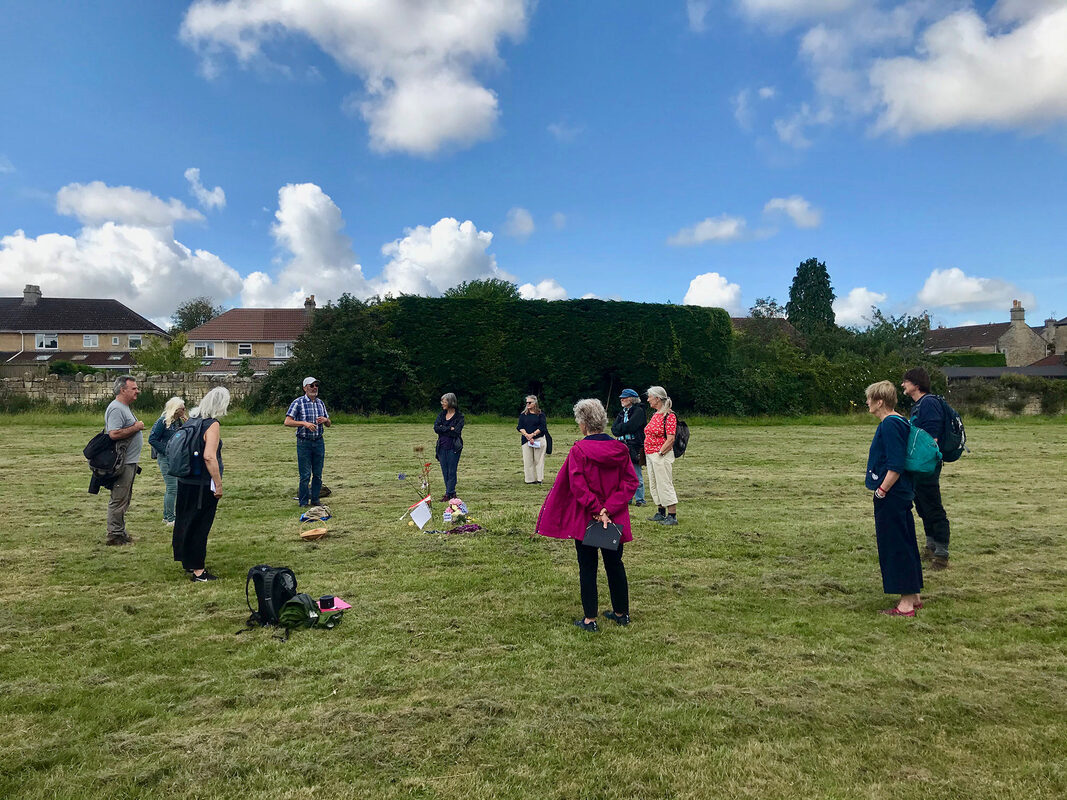
 This is an invitation to join Walking the Names at the Bath Union Workhouse Burial Ground on Wellsway Bath Sunday 1 November at 11.00-13.00
A slow and socially distanced walk. Some good news: The grass has been cut again, and again the evolving 'poor' memorial has survived. It looks like it is now recognised again in the cutting plan. The soundwalk made with the recordings we generated during lockdown has been nominated for an international award in Sound Walk September 2020! Its here: https://walklistencreate.org/walkingpiece/bath-workhouse-burial-ground-walking-the-names listen remotely or on your phone on the site using the Echoesxyz app. If you think its any good leave some stars or say something nice! Looking ahead: When will it be over? The remaining years of burials are now mapped out and if all goes well the final Walking the Names will be in March next year. At that point, after more than a year of firstr Sunday walks, Walking the Names, I will be moving on with the hope that this contribution will stimulate others and that perhaps by then new things are growing from the 'poor' memorial we have established. Spring could be on the way then too...and maybe the virus will be under control. As with so much we are working with there are tragedies, mysteries and surprises. The records offer a final mystery.... the very last name on the Burial Register for the Workhouse Burial Ground is Thomas Cowdery buried on 21 Nov 1964! Was he born in the Workhouse, or is it a misprint? Walking projects in development include work on botany and empire and I think I have found a way into walking the Enclosures tracing slaveownership and the journey of the cloth. And the Lake District project is still a possibility. Watch this space!
0 Comments
Walking the Names continued through the (first?) lockdown, many walkers recorded and shared their readings. Readings came in from around Bath, Bristol and beyond; one regular came in from Denmark. As we now return to the burial ground itself those distant readings have continued. This is a short film using readings made on Bornholm Island in the Baltic mixed with a fragment from the reading on the burial ground at the beginning of August.
The project has generated widespread interest as well as local involvement. People have made contact who think they may have ancestors buried in the field, others have got involved responding to the virus death toll in the underfunded and part privatised care sector. It has been a focus to consider the responsibilities of civil society towards its elders and those who are finding life difficult as a result of illnesss, disability or just bad luck. In doing so questions of care, responsibility and memorialisation hang over the local authority and our elected representatives who inherited the burial site from the Poor Law Guardians and of course the Church who consecrated the ground. Ultimately such questions return to us, how to respond, how to bear witness, how to repair. We walk with these questions. Join us every first Sunday details here
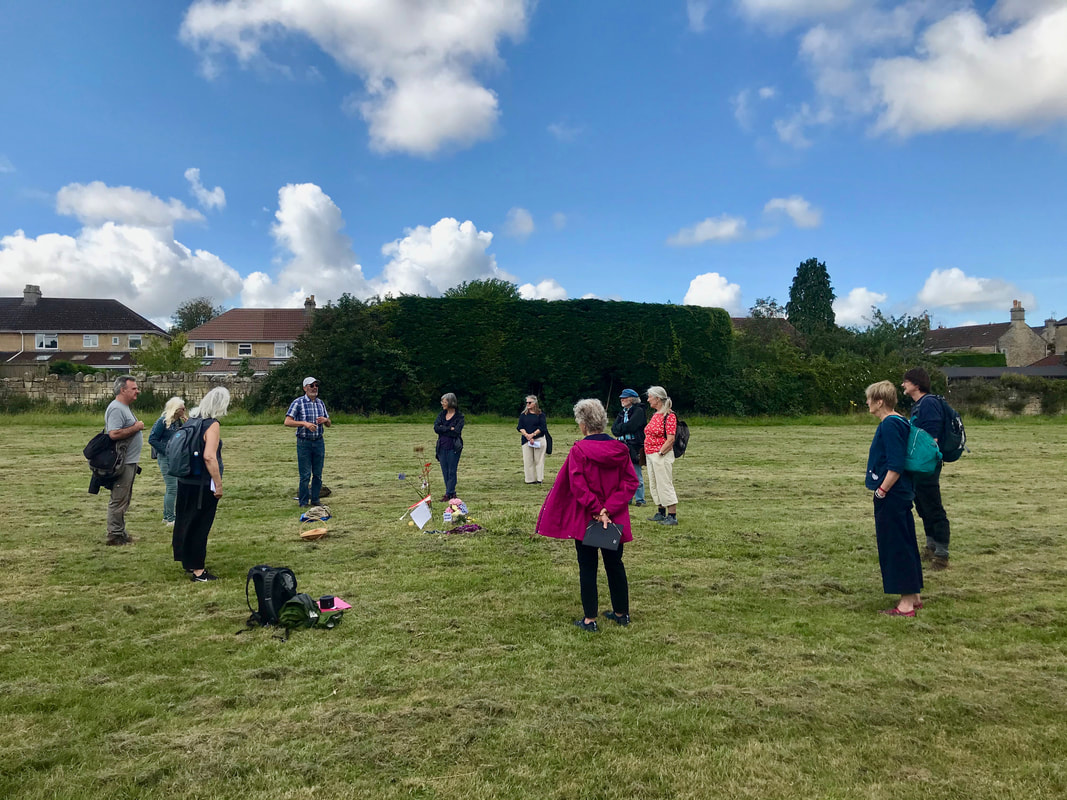 For the past 10 months, every first Sunday of the month without fail, I have been hosting a group Walking the Names at the Bath Union Workhouse Burial ground. Each month to the toll of the Workhouse bell we have walked and read and reflected on a group of names from the burial register, reading them day by day and month by month of their burial. Each month and on our own walks we have honoured the space and respected the dead, leaving flowers, stones and flags at a ruined and almost erased memorial. A ‘poor’ memorial is emerging. Twice the council has shredded it. This artists project is about holding this space of reluctant civic memory open. 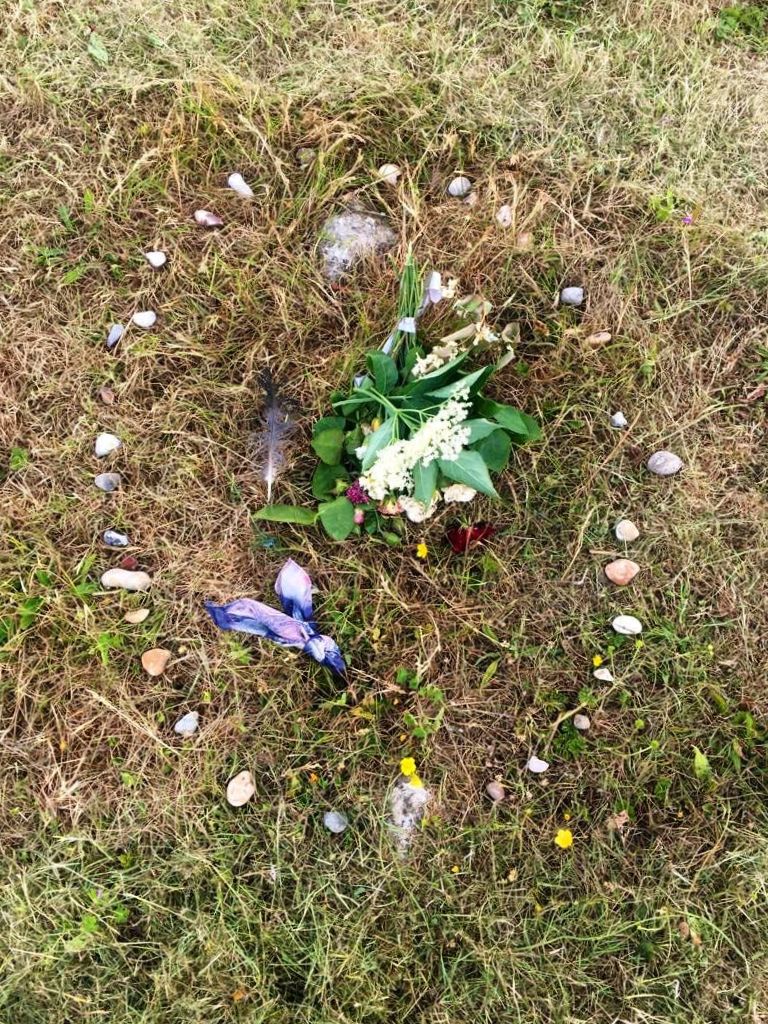 Each month we have walked we have gathered at the remains of the demolished memorial. Some remember it as a ruined trough they used as ‘home’ in childhood tag games. Today just a few stones remain deeply embedded. It has become a special place, the start and finish point for each Walking the Names walk. Flowers often mark the place and over the months this has become an improvised memorial of wreaths made with found found flowers, small stones, flowers from walkers gardens, wild flowers and more recently flags with the names of the dead. Bath and North East Somerset Council shredded the memorial again at the end of July. 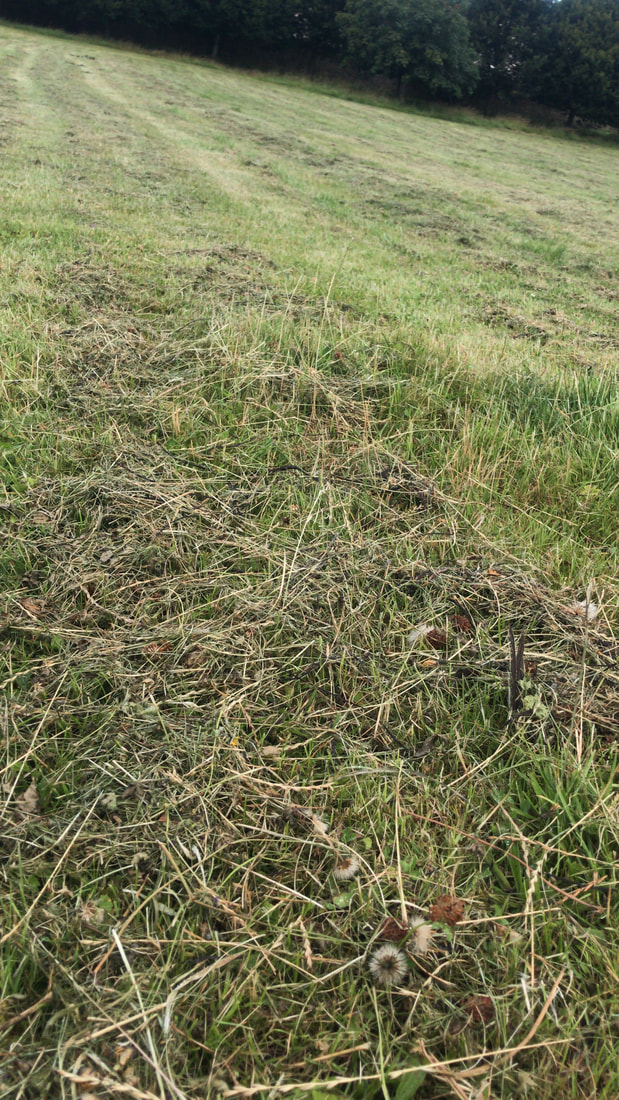 Inherited over the years from the Poor Law Guardians, the Council still own the site. The Park department mow the grass, they mow it into nice shapes for other people using other parks in the city, leaving spaces for other lives and other plants to grow. Why cant they do that here? They blame the contractors for mowing up and down but it would not take much ink to write into the contract an instruction them to save their blades and mow round this evolving ‘poor’ memorial. They did it once. As well as the responsibility for maintaining the site the Council has inherited a responsibility for respecting the dead of this City. On the first Sunday in August we renewed the 'poor' memorial. 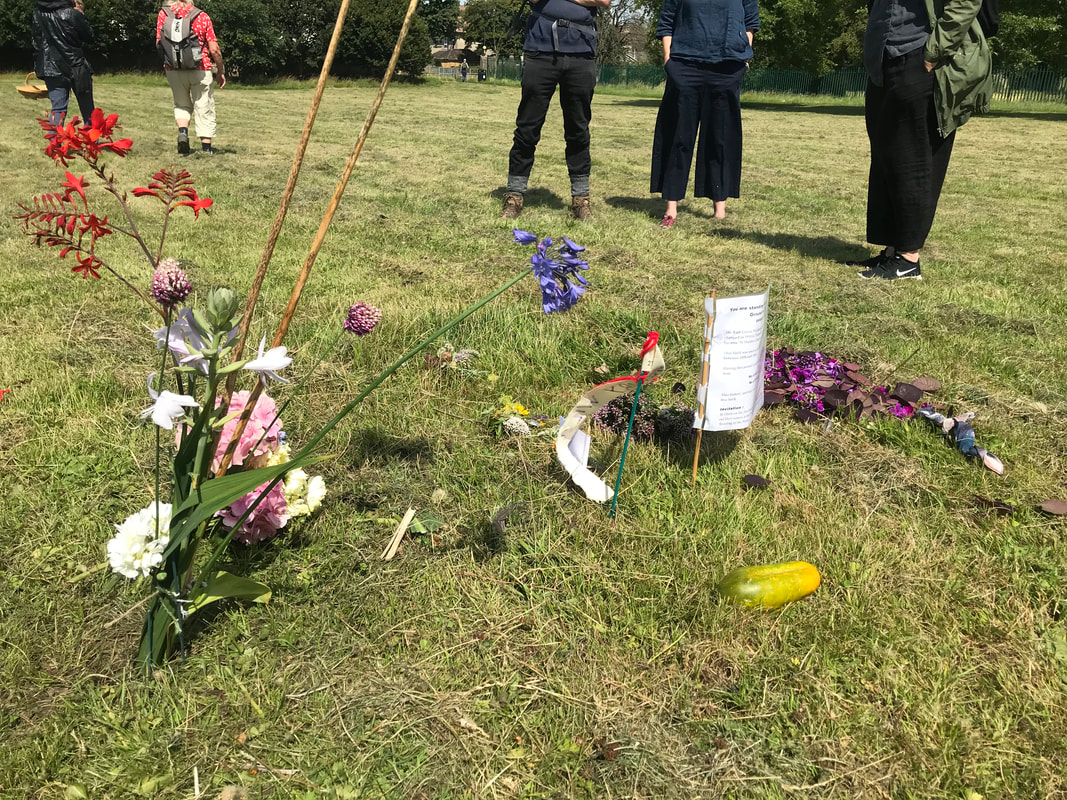 As the virus constrained our activity, Walking the Names has continued, recording and sharing our reading and walking. Watch and listen to the lockdown recordings here. You will hear the names from batch burials of the elderly and the young, some who had lived to a great age carrying memories of family and stories perhaps from the Enclosures, others not even old enough to know their names. We walk and think about the brutal life of the poor deprived of access to land and lured to the city of Bath, we reflect on the contemporary resonances, those dying of the virus in the underfunded and privatised care homes of the twenty first century. Thinking about attitudes towards poverty and older people, the vulnerable and people with disabilities, people not considered to be economically productive and thus viewed as expendable in the pursuit of herd immunity. We talked about civic responsibility, about how one of the richest cities in the British Empire hid its poor and dumped their bodies in a field on the edge of town, and now cant even be bothered to respect a memorial. 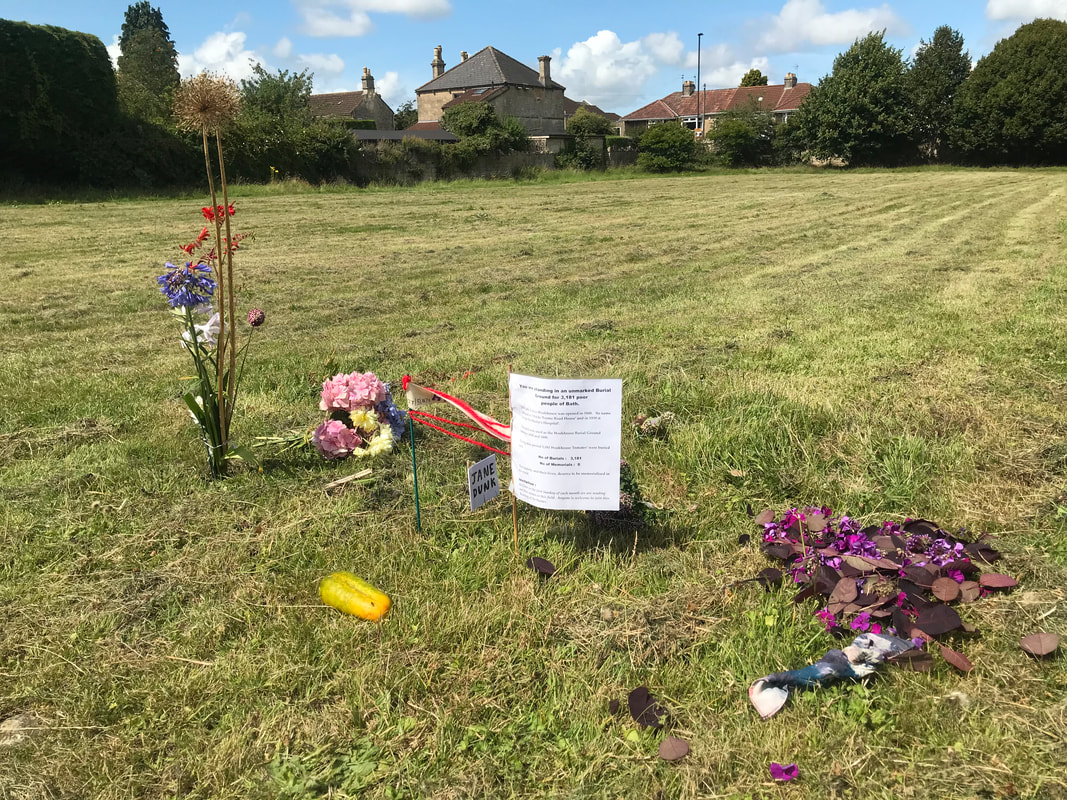 Here in the latter half of the Nineteenth century, throughout most of Queen Victoria’s reign, as the wealth of empire poured into England people were punished for being poor, even in their deaths. Over three thousand people are buried in unmarked graves on a patch of land not much bigger than a football pitch. The dead were brought from the Workhouse on a trolley following a path through a tunnel under the road to the field. The Workhouse ran a punitive regime of self sufficiency condemning the old and vulnerable, sick and disabled people to a miserable existence. Even in death the poor were denied a decent funeral, their bodies bundled into the earth behind the grim grey walls of the burial ground. Years ago the Council used to mow round the remains of the old memorial, then they removed the stones they could shift but their mower blades still chip away at old stones buried deep. In May they shredded the evolving ‘poor’ memorial, in a moving improvised ceremony a walker renewed it. In June and for most of July the ‘poor’ memorial found a life and began to grow. Sadly in August the Council scalped it again. On Sunday we renewed it and walked the names of those buried in 1871 and 1872. Leaving a flag for Henry Wilcox buried there on the 27 May 1871 just two days old and a flag for Jane Dunk buried there on 10 April 1871 eighty nine years old. So many local tragedies. 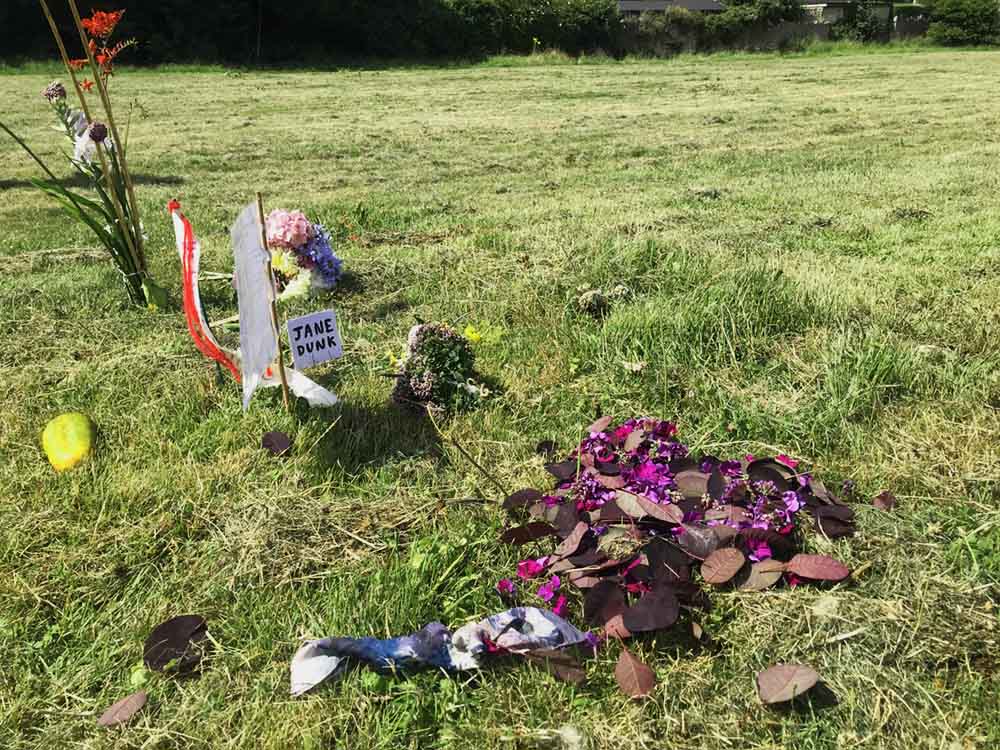 Walking the Names continues, if you pass through the field leave your own bio-degradable flag or flower or stone and pay your respects to the Workhouse dead and their modern counterparts. Join us next time on Sunday 6 September. A ‘poor’ memorial emerges.
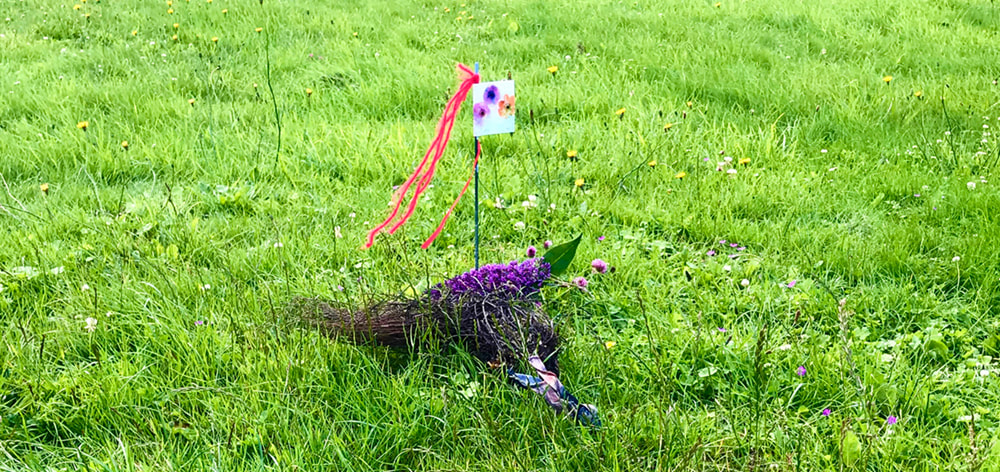 All correspondence now begins with the routine, but heartfelt, Dear Friend, hope you are safe and well. ..and I do…. In my nuclear armageddon nightmares a half life and more ago I used to imagine the slow cloud of fallout drifting towards us on the weather, invisible and deadly. So I have dreamed these moments of spring grass and green, yellow, blue, when the plant world bursts into life. But in the joy of this moment there is dread. Strange walking at dawn, getting up early to get out, not really out of choice but to avoid the pumping virus breath of unmasked runners and uphill cyclists. I am learning to fear. Watching/listening to the spaces humans are withdrawing from. Rats in the compost heap. The dawn chorus gets louder or did I just get up early In our house I was the last threat, it was me who shook hands with the nice scaffolder coming to build a platform to fix the roof lifted and scattered by the winds. Weeks ago and tomorrow, the two weeks are up from that last skin contact with a stranger. Our flat rang with Indian drones and sitar from my daughter and boyfriend who had dodged the virus like skimming stones on a calm sea: from master class training to tourism, a step behind Trump and a step ahead of lock down, to a show that was closed just as they got back. Last skip, a rescue ride picking them up and bringing them here, as it all shut down. Now they have gone, the house rests in a scented calm, for that moment it was a family Christmas in a lifeboat. With the death toll still rising and in the searing glare of a burning sun we realised how long it had gone on for. No testing. No tracing. Chaos in the Coop, silent panic in the well spaced queues at Waitrose. Monthly we read names and re-membered those who died of poverty in the Bath Workhouse as underfunded care homes bled death statistics, their modern counterparts. The virus forced imaginations; The virus revealed ugly truths and complacent privilege. And as violent deaths of black people at the knees and guns of the white state continued, a boil like a great carbuncle on the face of humanity burst. Brewing for 300 hundred years. I cant breathe. I cant breathe. I cant breathe I cant breathe I cant breathe I cant breathe I cant breathe I cant breathe I cant breathe I cant breathe I cant breathe I cant breathe I cant breathe I cant breathe I cant breathe I cant breathe I cant breathe I cant breathe I cant breathe I cant breathe Twenty times. Last breath. One man, George Floyd. Too many others. 300 years. White silence. Whisper it I don’t know where home is. Today That insidious enchanting white silence clings to the valleys of wealth in a oily smog, as contagious as the virus, invisible, deadly. The sounds of questions, and a noisy reclaiming the space opens the door to reparation and reconciliation. Locked down, not locked down, still being lied to. Its shit. Our celebration is cancelled. The sun has stopped shining...but even that bit was scarey. at least Colston is down and the shout is out. With love and solidarity Your mate. Response to Space Place Practice call for responses themed Home
In May I should have been walking with co-artist Lorna Brunstein developing a programme of work for installation at the Lake District Holocaust Project. Sara's Last Steps would have taken place during a weekend of events commemorating the arrival of a group of Jewish child refugees to a location near Windermere in 1945. The weekend included a planned reunion of those still living and able to travel plus their families and descendants. Sadly the virus has put paid to that and the project is on hold.
It is our intention to develop the project and if possible stage the walk and the installation at some point in the future. Our intention was and remains to explore moments from the experience of the Windermere Children, to walk and ask questions, to think with our whole bodies in the spaces where those young refugees began to find sanctuary and exile towards generating contemporary resonances. The project is a further development of the creative collaboration with Lorna Brunstein,, Forced Walks; the invitation to participate in this Lake District project remains open. More information at forcedwalks.co..uk Walking the Names online
Walking the Names goes online as the virus closes us down to isolation and social distancing. An informal trawl of those who had joined the first few monthly walks resulted in nearly twenty walkers interested in taking part on line. Each walker was issued with 20 names from either 1862 or 1863 entries in the Register of Burials at the Bath Union Workhouse Burial ground just off the Wells Way. This brings a whole new set of voices to the project and as they get stitched together it promises to be an interesting piece with contemporary voices and reflections. In this time of the virus, overhearing dangerous eugenics talk of herd immunity and collatoral damage, it seems to me that the people of Bath who died of poverty in what was still one of the richest cities in the world are a presence worth remembering and reflecting on. From their unmarked graves in that unmemorialised burial ground they call on us not to forget. We reflect on their presence and the contemporary resonances: people who become defined as other, and then considered not to matter and are finally discarded. Why walk and read the names aloud? For me its something about bringing those individuals to mind and body, even if we cant do it together at the site of their burial. As we move and breath and give sound to the names on the page we generate a deeper richer knowing of that individual. We are literally re-membering them. Its is a gentle and emotional act of witness for the othering of the poor and vulnerable, casualties of a system that generated the wealth and serviced the wealthy. Especially poignant and punitive at the time given the Victorian culture of death, they were denied a ‘decent’ funeral, a respectability in death rather than shame to be passed down the generations.There is no memorial to their lives and there was no one to mourn them in death. These people died not from a virus but from poverty. This field of bodies and each of those individual lives speaks and I reflect on the rise of homelessness and an underfunded and increasingly privatised state unable to care for its casualties. Strange that in this moment of the virus the underpaid gig economy workers who deliver food, the bus drivers and public transport workers, the long overlooked hospital cleaners and canteen staff all become heroes. We cheer a health service crippled by underfunding that pulls out all the stops to save us, migrant workers who are doctors, nurses and support workers and all their colleagues are applauded even as they check their residency status. Walking the Names in this time of the virus urges a reappraisal of care and responsibility. Today we walked and read names aloud in our back gardens and beyond, moments of exercise, carefully observing social distance and examining perhaps our historical distance from workhouse dead to virus dead. Layers of past in the present touch and a new knowing perhaps emerges. As the media comes in and comments other than mine surface I will post them here. 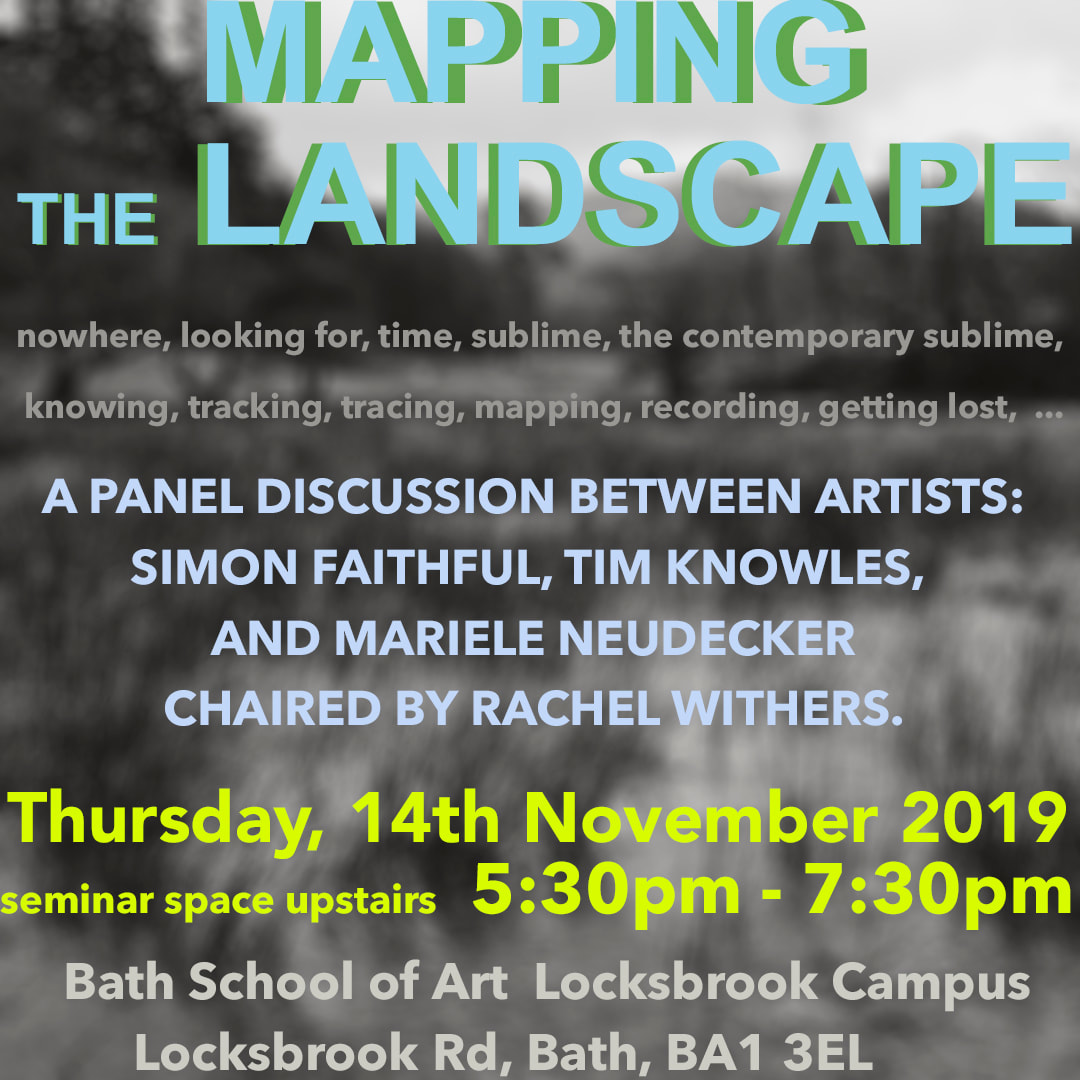 I am not hosting this but hoping to get a wider public along, should be good!
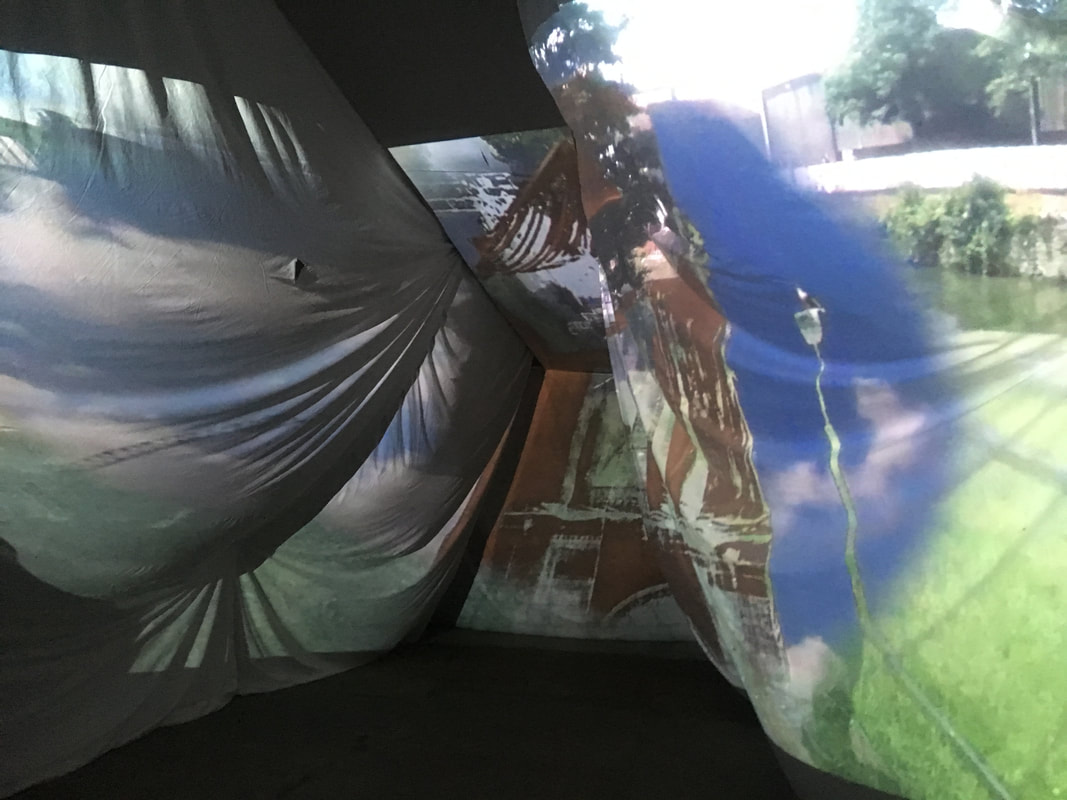
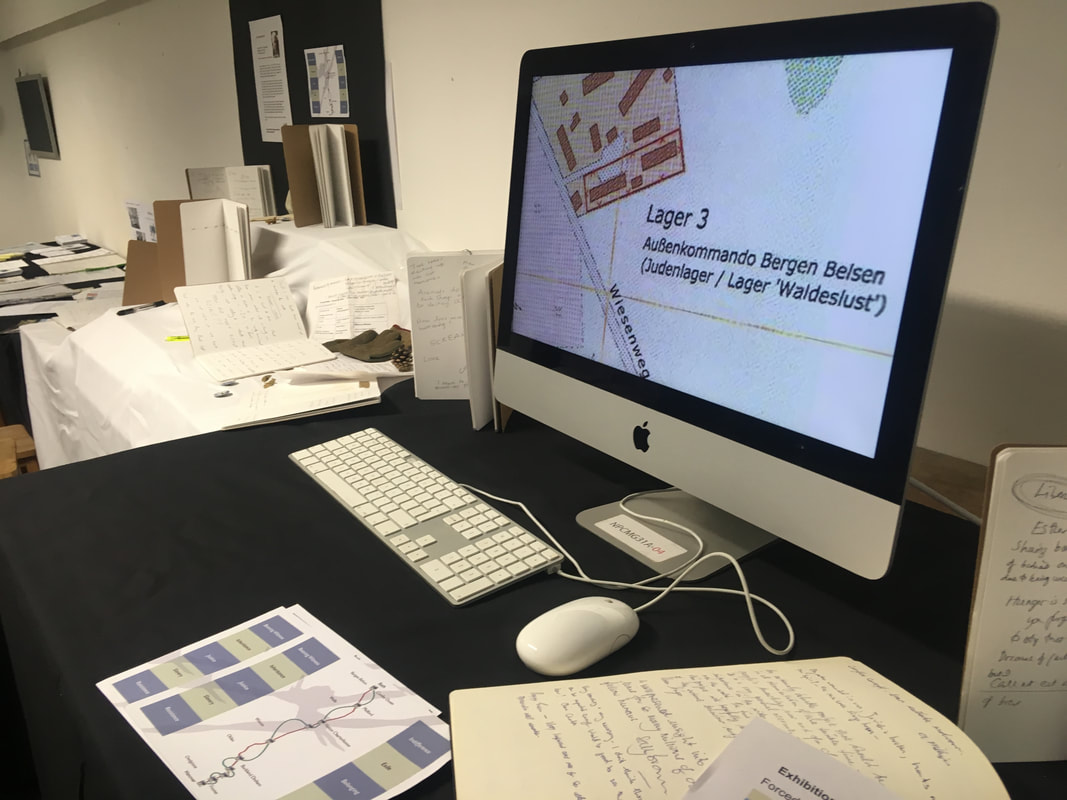
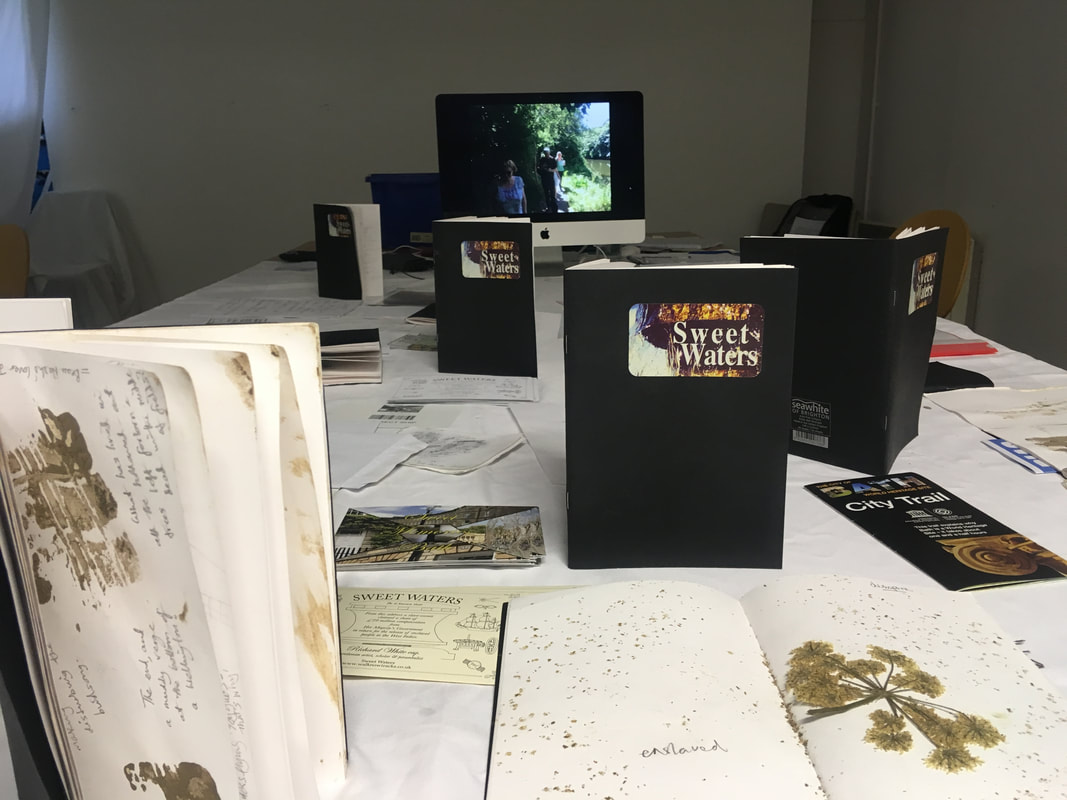
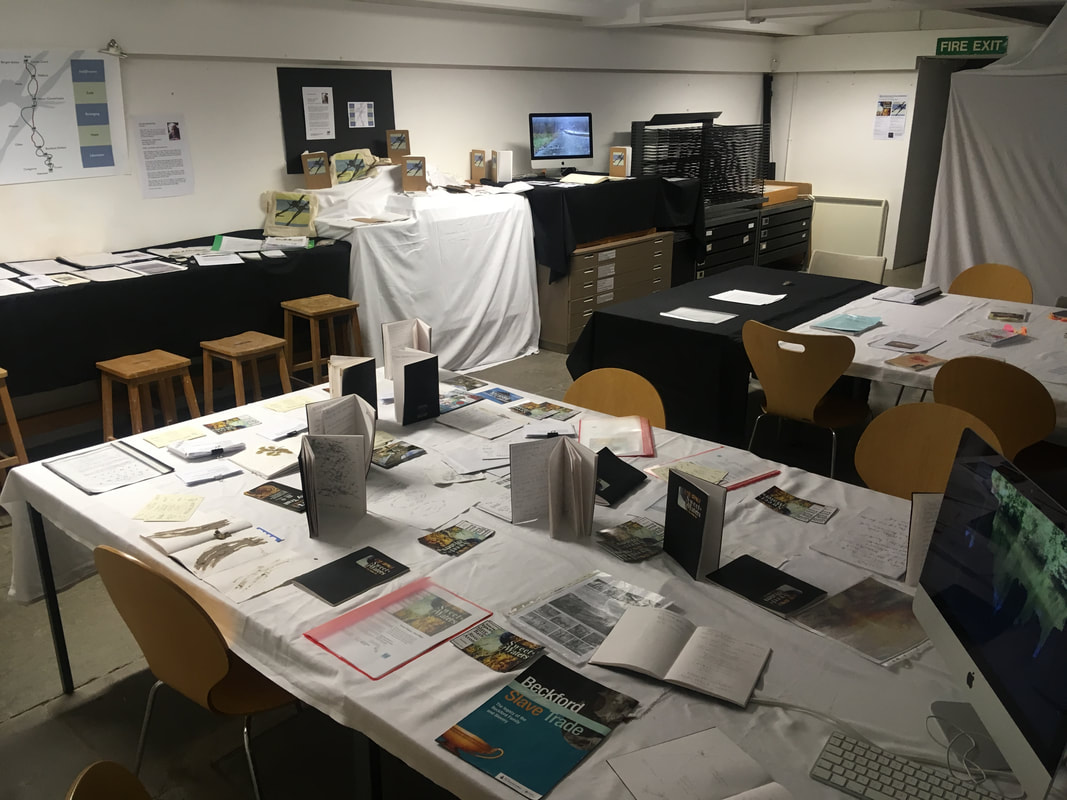
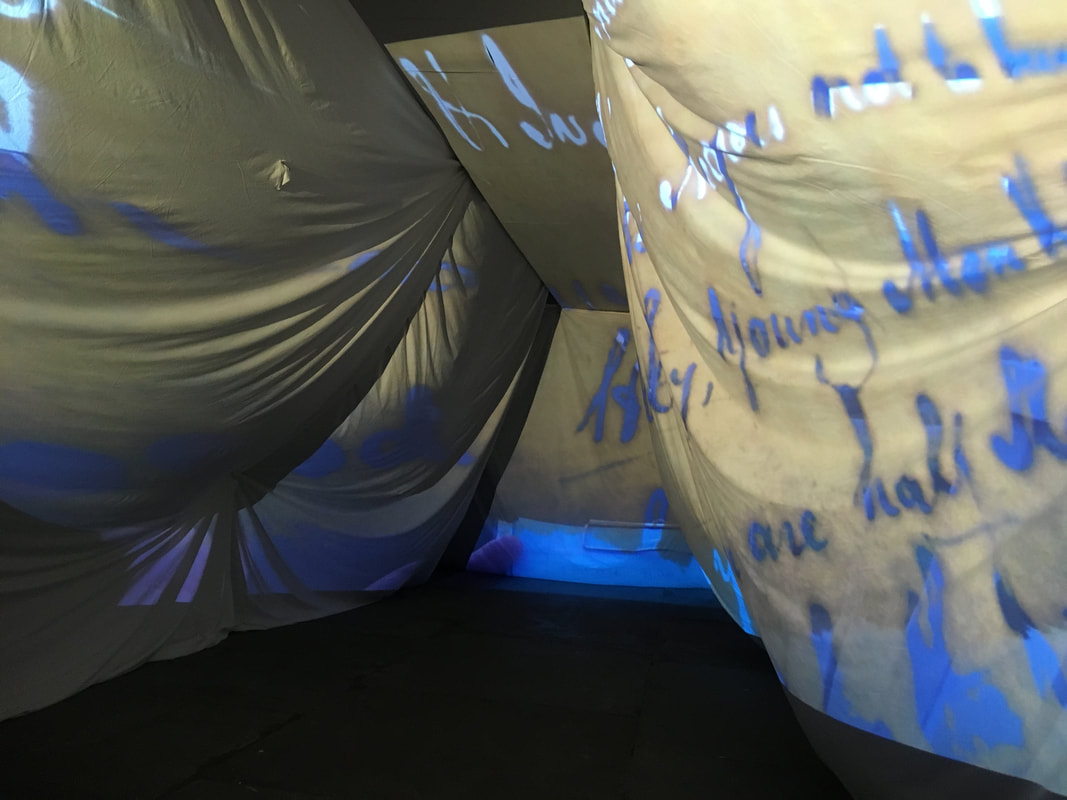
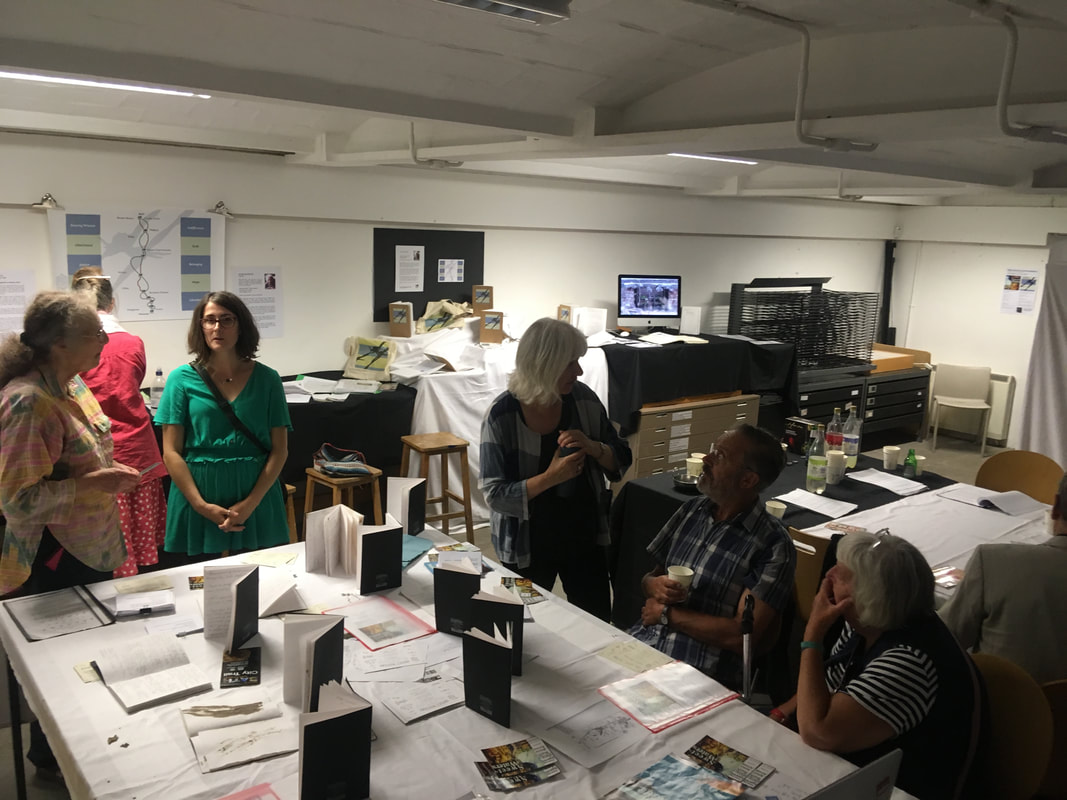
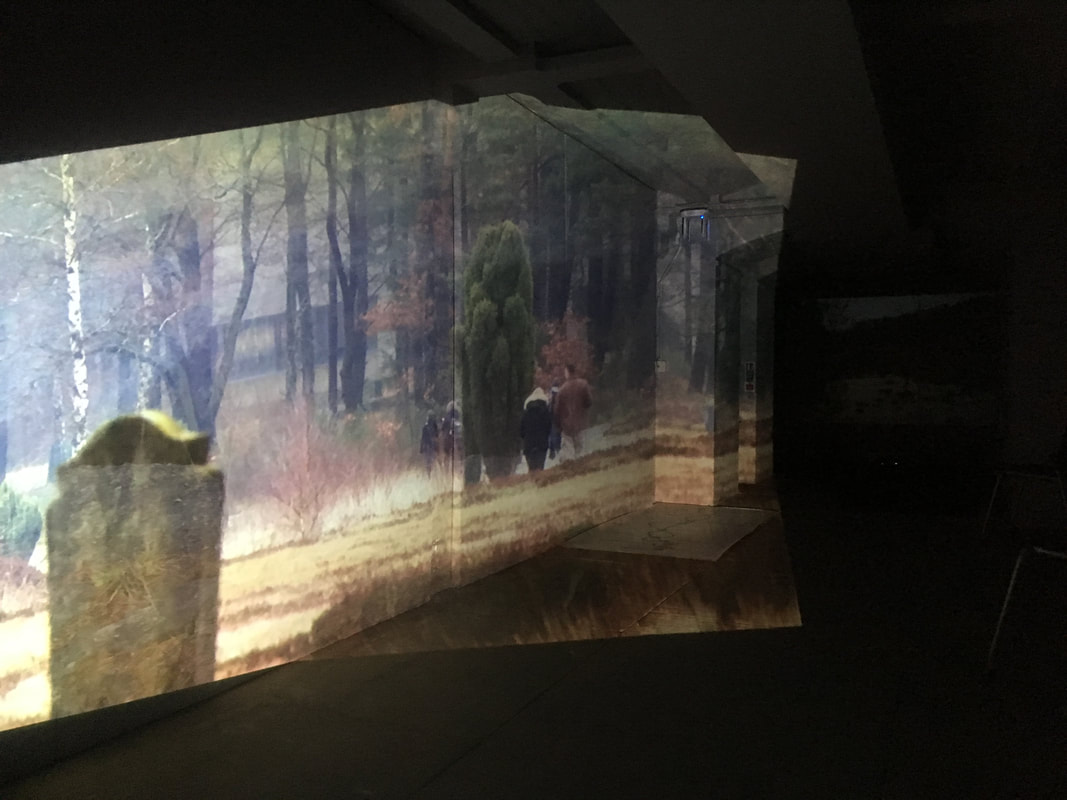
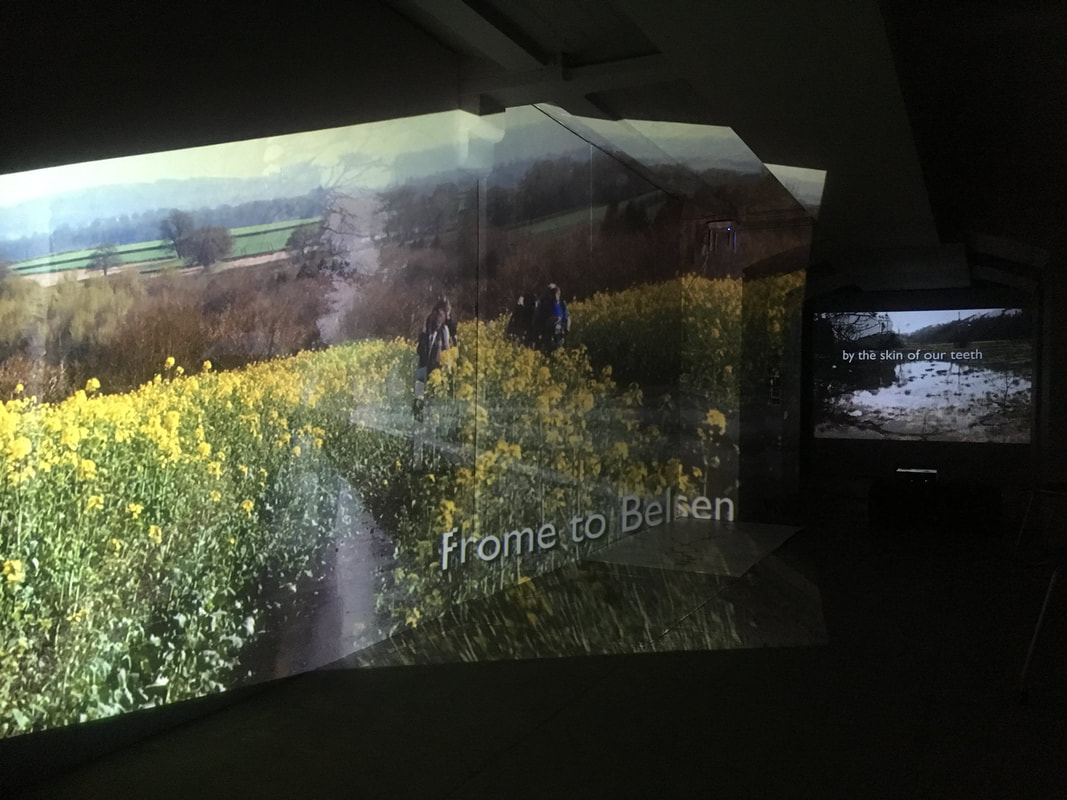
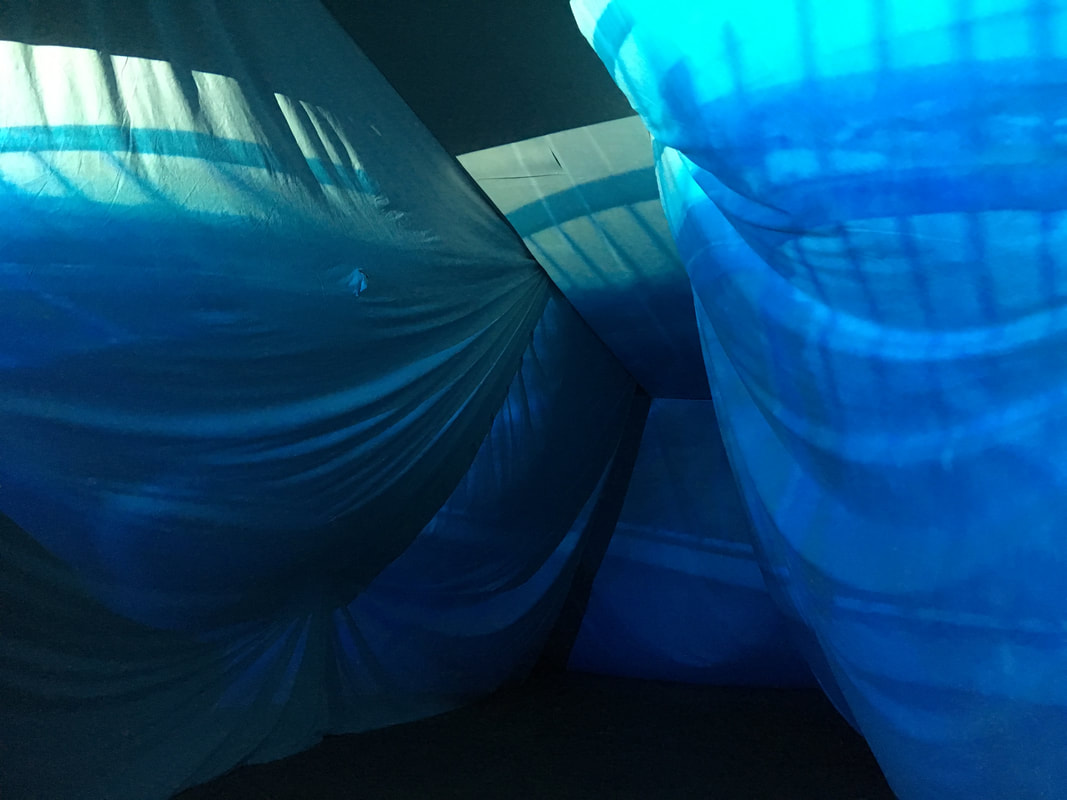
More than 5 years in the making and hundreds of miles in the walking, (dis)enchantments and perambulations short films and soundscapes plus documentation was exhibited at Corsham Court, Wiltshire, The exhibition presented short films and soundscapes plus documentation of the creative practice as research for Richard White's PhD, In the cellar gallery in two linked immersive installations, work was shown from the Sweet Waters and Honouring Esther cycles of walks. Documentation including walkers notebooks and some of the other research outputs were presented in an adjoining room
iThe work presented in installation evoked the atmosphere and embodied experience of the walks, reflecting thoughts and impressions of the walkers. The approach taken with the film above is closer to documentary and offers an account of the Honouring Esther project, The film links to the other films shown from the Honouring Esther on Richard White's Vimeo channel here. The short sample below is a walkthrough of the installation showing samples from both ends of the installation, Honouring Esther work is shown first.
In addition to work shown in installation an interactive sampler was produced using Klynt and is available here
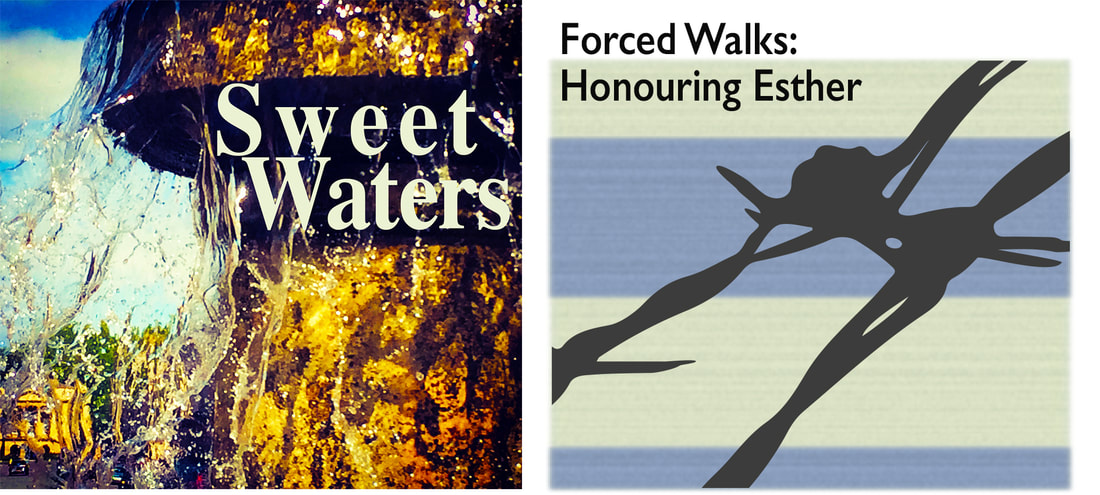 (dis)enchantments and perambulations: walking arts and reluctant heritage
An installation Thursday 18 July to Tuesday 23 July Corsham Court Long Gallery, Corsham Looped short films and soundscapes. A walk ( Saturday 20 July). Re-visiting two cycles of walks Sweet Waters and Honouring Esther. Juxtaposing the experience of walking for pleasure with coerced walking and forced migration. Honouring Esther attended to a Nazi death march and Sweet Waters explores the legacies of slave-ownership in Bath and along the River Avon. Both projects develop an iteration of a ‘walking-with’ approach towards revealing and countering reluctant heritage. Thursday 18 July to Tuesday 23 July Corsham Court Long Gallery, Corsham (dis)enchantments and perambulations: an installation access via Blue Door, Bath Spa University entrance
Corsham Court, Church Street, Wiltshire, Corsham SN13 0BZ NB: there is no parking on the Corsham Court site for visitors to this exhibition, this is a Bath Spa University event and does not provide access to the Methuen collection or the grounds. Free on street parking is available nearby at the end of the High Street, on The Laggar and on Priory Street, There is a car park by the Co-Op at the other end of the High Street 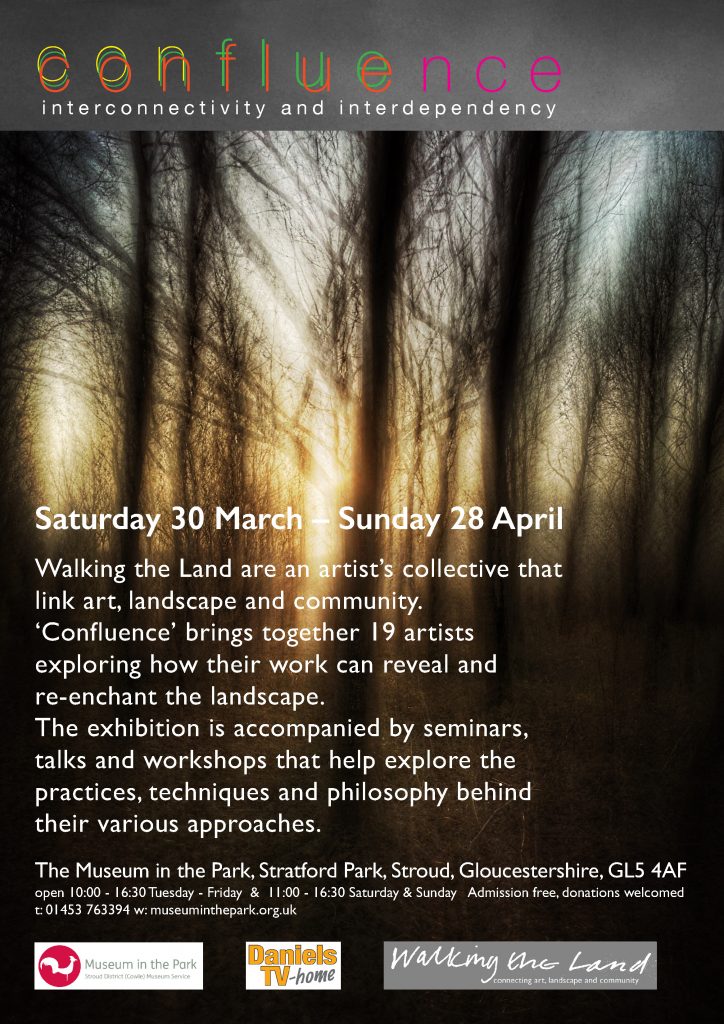 Confluence exhibition Stroud. I am exhibiting work here alongside Walking the Land artists and offering a short textual intervention with the Space, Place, Practice research group. We give the idea of enchantment 'a good frisk' according to one writer. The exhibition takes place at the Museum in the Park, private view Wednesday 17 April and other workshops through the run
|
Archives
February 2024
Categories
All
|

 RSS Feed