Finding Country is an evolving walking arts project. Walking and asking questions about land and memory in North Somerset and South Australia, being alive in a haunted landscape transformed by enslavers, their descendants and their business associates. It begins with a walk I hosted in Adelaide in 2023 and continues as I return, haunted by the spectres of empire.
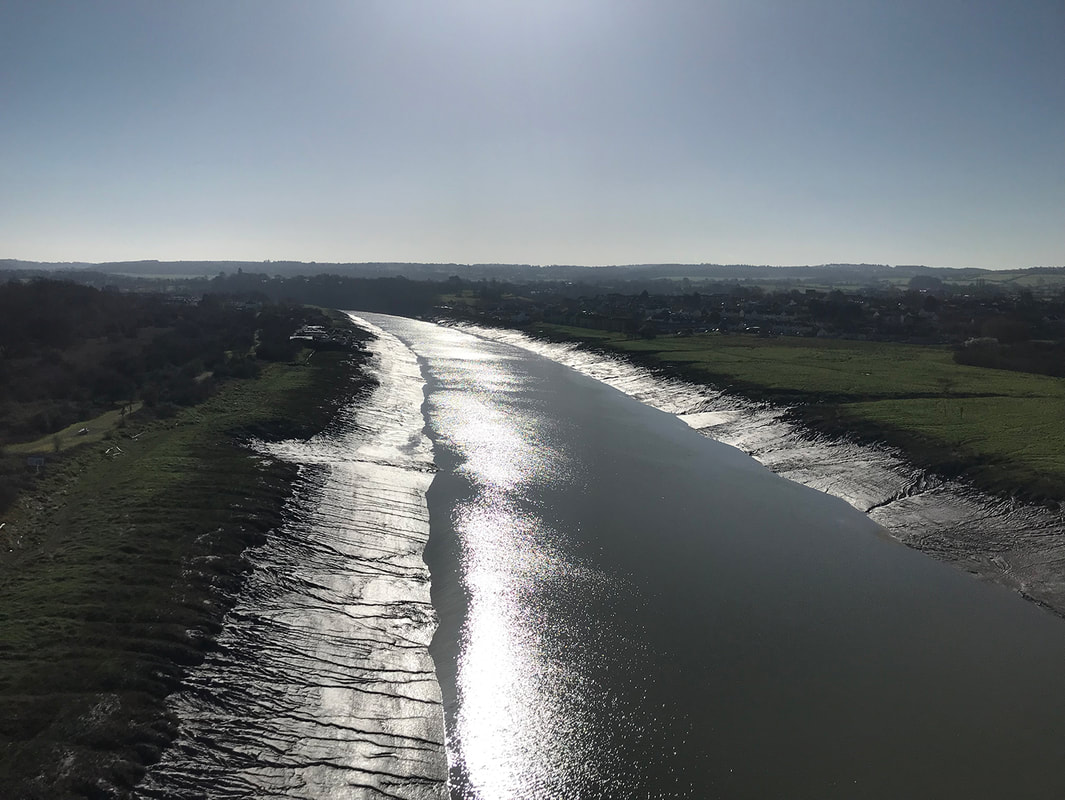
From the Avonmouth bridge looking South East, the estates of the enslavers, a river with a huge tidal range on which their ships came and went.
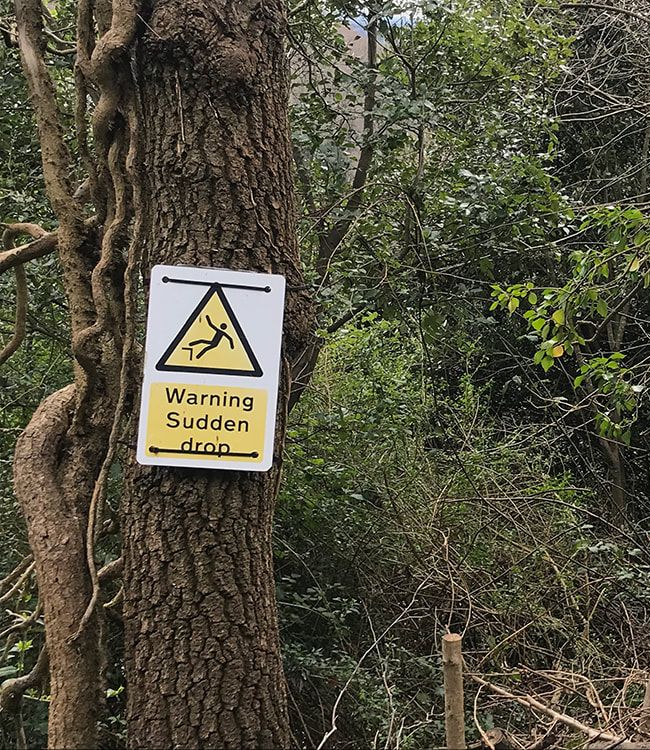
3) Kaurna Learning Circle
Karra wirraparinangku (From the Red Gum Forest River) is described as an acknowledgement and celebration of the Kaurna people, culture and country. Designed as a place for ceremony, cultural exchanges and learning. A welcome statement is inscribed in the brick paving Marni naa pudni tirka kurruru-ana (good you all come to learning circle). A tribute to resilience and persistence, the Kaurna language only survives because a few German missionaries wrote it down, whilst the British tried to erase it. A language and culture obliterated through colonial culture wars surviving as distant echoes in the memories of grandparents and elders. The language reintroduced and re-claimed, questions of recuperation... |
This is a backwards write up evolving as I post it and make sense of it.
Integrating with walks I have hosted in the past and in the present. Imagining Finding Country Scroll down for part 1 or read it in reverse order. Cut and paste entangled writing, there will be more pictures and some day references. 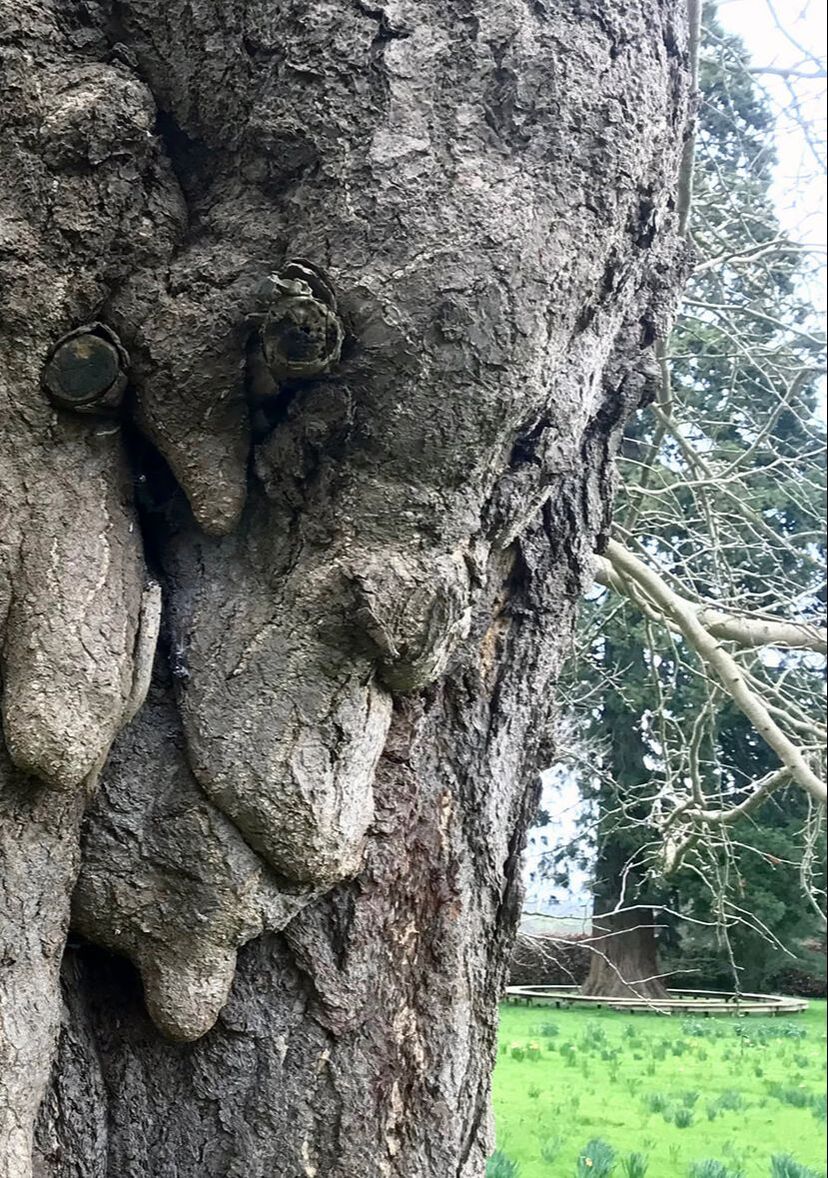
|

A meeting place and cultural and ceremonial space, the Kaurna Learning Circle entrance is marked by the Kaurna language set into paving, and framed by Wangu Pole art installation. It was developed as part of the University of Adelaide Reconciliation Action Plan – Yangadlitya (For the Future) 2019-2021 and in partnership with Wiltu Yarlu
The design of the shade structure is based on the water and driftwood in the river. Built more or less on the site of the former settler military magazine which held guns and explosives. Today it is within sight of the stagnant pool of river water caused by colonial interference in the water flow and overlooked by the Barr Smith Library. Donor names memorialised without reference to the sources of their wealth or methods of extraction.

|
There is a Welcome to Country on the shade structure which reads, Kaurna miyruna wangkanthi marni naa pudni, Kaurna yarta-ana (Kaurna people say good you all come to Kaurna country). These welcomes are beautiful and powerful provocations inviting respect for country. The recent vote on a formal constitutional status for Aboriginal people and Torres Strait islanders demonstrates how these generous welcomes continue to fall on the hard and ungrateful ground of the settlers. Given the result of the referendum in late 2023, this Welcome to Country and the related acknowledgement statements by Australian government agencies and businesses on their websites, marketing and stationary ring empty.

Leigh Court, North Somerset. Construction funded by Phillip Miles, enslaver.
In North Somerset acknowledgements of colonial sources of income and how it was extracted or the impact of colonial wealth on the land and the local people who once worked it are rare. Currently owned by Business West, Leigh Court, above, provides an acknowledgement of the source of the wealth manifest in the building on its website...in the gents toilet downstairs and reputedly in the ladies too!
A not-for-profit business support organisation Business West is a certified B-Corp, pledged to meeting the highest standards of verified environmental and social performance with public transparency and legal accountability.


|

The Wangu poles, below, were designed by Kaurna and Ngarrindjeri artist Paul Herzich and consists of wangu (seven) large aluminium poles, laser cut with thousands of hand-drawn circles to tell an ancient Kaurna story of the relationship between the Wardlipari (the milky way) and the Karrawirra pari (River Torrens). For thousands of years the Kaurna people have used the Karrawirra pari to sustain their way of life. Find out more here: Wiltu Yarlu.

Whilst this this artwork embodies traditional ritual knowledge of the Kaurna community, the University of Adelaide campus architecture largely embodies the knowledge and values exported from Europe and imposed by colonialism. The columns, the frieze, the cornicing all resonate with Greek and Roman architecture forms rediscovered and promoted in the European 'Enlightenment'.

Behind the Learning Circle is the Reconciliation Garden here there are circular stone seating disks, compacted sand and garden beds with specific trees and shrubs from Kaurna country.
I thought that as part of the walk I would leave a stone I had brought from the beach in England where I grew up. It embodied something special for me and I thought it would be a meaningful gesture of reconciliation and connection. I was unable to make contact through Wiltu Yarlu with the custodians of the site and on site as we walked I began to question my motivation. The stone came back in my pocket, a matter of doubt. Click for more on the Kaurna Learning Circle from the University of Adelaide |
The physical placing of the statements at Leigh Court is ironic perhaps and possibly an insult to the memory but even the King has to go for a wee! Finding Country embraces the invitation in the closing paragraph of the statement, also repeated on the website, the project starts to emerge as a walking and questioning opportunity on acknowledgement, apology and repair. There is much to be learned from the experience of Welcomes to Country in Australia and similar expressions of indigenous land rights acknowledgement in other colonised places.
2) Relics of Empire: 1885 Jubilee Pavilion.
|
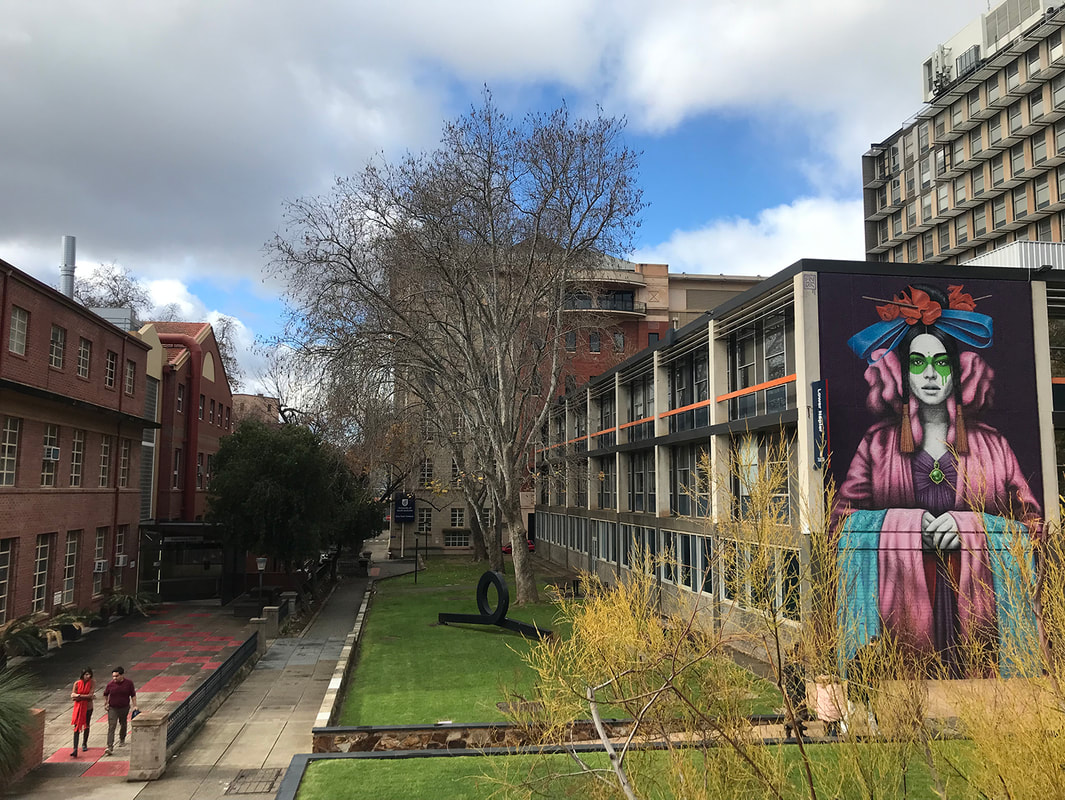
The University of Adelaide Napier Building was built on the site of the Jubilee Pavilion,
What was disturbed during these construction phases? What survives? Whose voices could we hear if we tried? Spectres on the stairs |

|

|
Tradescants..father and son both John
Lets stop by one of those London Plane trees and see what it might tell us. This is a hibrid tree that combines a european plane with an american plane… some stories find it in Spain perhaps not surprising as they were the earliest european empire builders in the americas. Maybe someone brought back a tree or some seeds. But the claim to fame goes to the father and son Tradescant team who were already surfing the wave of empire. They were beginning to open up a market for the rich to collect plants in the same spirit as they were collecting other strange and exotic things from around their known world. These cabinets of curiosity were to become part of the tradition of the wealthy in England and elsewhere, visiting each others houses, showing off their wealth, reach and knowledge in objects, books,architecture, land plants. These plants were in a sense trophies and the Tradescants were hunting for them and using their networks to do so. |

Could these be the London Plane saplings you can see in the old photos 1885 Jubilee Pavilion…perhaps they hold the memory of the burials of Kauna people right here?
|
In the early 1600’s as gardener to the Lord High Admiral, the Duke of Buckingham, Tradescant the elder was able to send messages to merchants and ship’s captains opening up the trade routes of colonisation and empire. He sent this message via the Secretary to the Navy to those trading overseas, particularly in North America and West Africa,
I have Bin Comanded By my Lord to let yr worshipe understand that it is His Graces Plesure that ye should In His Name Deall with All Marchants from All Places But Espetially the Virginie and Bermewde and Newfound Land men that when they go Into those parts they will take Care to furnishe His Grace With All Maner of Beasts and fowels and Birds Alyve. Or If Not Withe Heads Horns Beaks Clawes Skins fethers flyes or seeds plants trees or shrubs. Also from Gine or Binne or Senego turkeye…. also from the East Indes withe Shells Stones Bones Egge Shells with What Cannot Com Alive..[and so the list continues before ending] and …. Any Thing that is strang.
…and here we get a whisper of what else was happening and how the trade of the Tradescants was entangled in the emergent British Empire. John the Younger travelled to Jamestown in the new colony of Virginia, once the home of the Algonquin nation. He arrived in 1637 less than twenty years after the first cargo of captured and enslaved Africans had disembarked there. The Tradescants had invested in the Virginia colony, notoriously the first colony to establish a legal framework for chattel slavery.
I have Bin Comanded By my Lord to let yr worshipe understand that it is His Graces Plesure that ye should In His Name Deall with All Marchants from All Places But Espetially the Virginie and Bermewde and Newfound Land men that when they go Into those parts they will take Care to furnishe His Grace With All Maner of Beasts and fowels and Birds Alyve. Or If Not Withe Heads Horns Beaks Clawes Skins fethers flyes or seeds plants trees or shrubs. Also from Gine or Binne or Senego turkeye…. also from the East Indes withe Shells Stones Bones Egge Shells with What Cannot Com Alive..[and so the list continues before ending] and …. Any Thing that is strang.
…and here we get a whisper of what else was happening and how the trade of the Tradescants was entangled in the emergent British Empire. John the Younger travelled to Jamestown in the new colony of Virginia, once the home of the Algonquin nation. He arrived in 1637 less than twenty years after the first cargo of captured and enslaved Africans had disembarked there. The Tradescants had invested in the Virginia colony, notoriously the first colony to establish a legal framework for chattel slavery.

The London Plane proved to be very resilient and able to thrive in many conditions including the increasingly polluted cities of Europe and the empire. It is planted widely in Adelaide introducing an almost unknown phenomenon in the continent, an annual leaf drop.
Back in London the Tradescants had a plant nursery where they grew on their finds and sold them into a growing market of collectors. It is here, according to Tradescant mythology, that the first London Plane was found. The Tradescants 'Ark' was one of the first European botanic collections. As European plant hunters criss-crossed the globe the arboretum became a significant addition to the estates of those enriched by enslavement and colonial extraction, a museum of trophy plants. Through their plant collections the wealthy demonstrated their power, reach and knowledge in the display of exotic plants. |
Botany and Empire are inextricably mixed.
Plants were tested and acclimatised, local settler gentleman in South Australia set up an Acclimatisation Society dedicated to introducing and domesticating select “animal, insect and bird species” from the British Isles “whether useful or ornamental ... in the hope that they may be permanently established here and impart to our somewhat unmelodious hills and woods the music and harmony of English country life”. By the 1870’s many European plants for commercial use had been introduced to Southern Australia including wheat, olives and grapes. 
Adelaide's Museum of Economic Botany is in the centre of the City's Botanic Garden
The import and export of plants extended a process of wealth extraction and terra forming at home and abroad. The European 'Enlightenment' passion for botany and the roll out of the Linnaen system of the naming of plants surfed the wave of colonisation. Erasing and deriding the indigenous knowledge systems that were before their arrival.
|
Carl Linnaeus’ star pupil Daniel Solander and Joseph Banks of Kew Gardens fame were on the boat with Captain Cook on that fateful day Sunday 29 April 1770. Banks and Solander were key to naming the site, Botany Bay. Banks went on to found a world wide network of Botanic Gardens centred on London and even fitted up Admiral Phillip’s fleet of convict ships to carry plants to and from the colony at Sydney

To the Stairs. Pavilion built on burial sites of Kaurna people
Where you are standing a great pavilion was built for the settlers to celebrate their Queen and Empress. In 1885 Queen Victoria had been queen for 50 years and across the empire cities showed their allegiance by building pavilions and holding great exhibitions largely of the agriculture and manufacturing industry of the white settlers. Celbrating the pastoralism and other forms of colonial extraction that were impoverishing colonised people. In the building work human remains were discovered, these are reported in the local newspaper as Aboriginal remains.
Although the building was constructed over their remains, Aboriginal people were largely excluded from the Jubilee. There were no recognitions or acknowledgements of country, in fact Aboriginal people were not even counted in the Australian national census until 1971. Kaurna people were not entirely absent however and performed a series of dances and songs for the visitors to the Jubilee. The performances in the city attracted tens of thousands here and at the Oval.. A tourist 'corroboree' beginning to discover the commercial potential of their culture until that too was stopped by the church and the authorities. Acts of resistance. Or recuperation?
Where you are standing a great pavilion was built for the settlers to celebrate their Queen and Empress. In 1885 Queen Victoria had been queen for 50 years and across the empire cities showed their allegiance by building pavilions and holding great exhibitions largely of the agriculture and manufacturing industry of the white settlers. Celbrating the pastoralism and other forms of colonial extraction that were impoverishing colonised people. In the building work human remains were discovered, these are reported in the local newspaper as Aboriginal remains.
Although the building was constructed over their remains, Aboriginal people were largely excluded from the Jubilee. There were no recognitions or acknowledgements of country, in fact Aboriginal people were not even counted in the Australian national census until 1971. Kaurna people were not entirely absent however and performed a series of dances and songs for the visitors to the Jubilee. The performances in the city attracted tens of thousands here and at the Oval.. A tourist 'corroboree' beginning to discover the commercial potential of their culture until that too was stopped by the church and the authorities. Acts of resistance. Or recuperation?
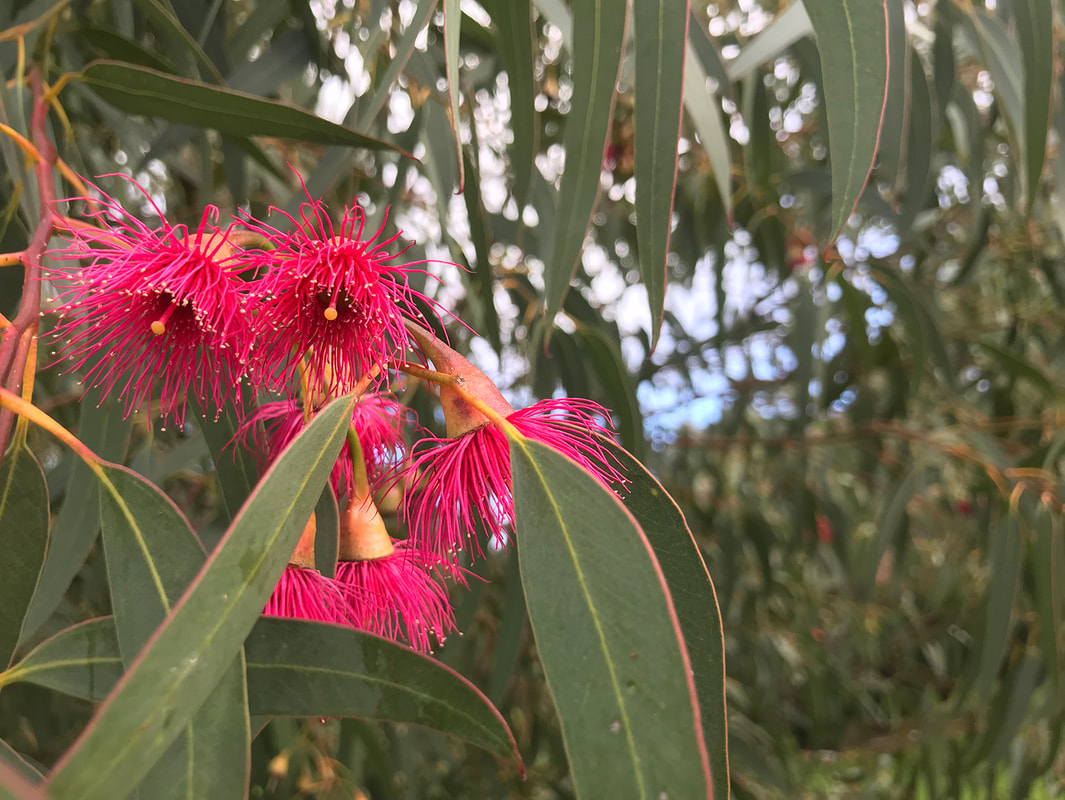
- An opening and an invitation
I am a white able bodied English man, I grew up in the South West of England in a white christian monoculture learning about the heroes of the British Empire and all the wonderful things that came into us from the colonies, chocolate, wool, butter, sugar, bananas and fruits of all kinds, a cornucopia from the world. I learned nothing of the ecological, cultural and political atrocities of colonial extraction or how the privilege I inherited and continue to enjoy in my daily life was funded by the wealth generated by the labour of captured and enslaved Africans in the caribbean and the wholesale looting of colonised lands. I acknowledge those whose suffering and loss gets me here today. I am still learning, I use my privilege to learn and share, to retell stories into the landscape, to acknowledge what was taken and put something back, to help make the world a better place
I am learning and sharing ways of alerting my whole body to see, hear, feel, sense and think. Walking and asking questions: questions of place not only why and how but also questions of my body, what does it feel like, taste like, smell like. Sensing and imagining..
Moving slowly, traversing the land on foot you notice the strange things that poke through: the layers of time, memory and place. Ruts in the road, rocks dropped by glaciers, shapes in the landscape, old trees, place names and landmarks they all have something to tell.
I am interested in the uncanny connections of here and there, now and then. The folds of time, memory and place and what pokes through.
I am interested in the places that Olivete Otele calls ‘reluctant sites of memory’, places where memory is denied or the story of place is deliberately incomplete. Places of disappearance. Whether it is for members of the African diaspora, for survivors of other violent forced dispersals or for any people whose stories, culture and knowledge were disappeared and silenced there are sites of significance where memorialisation is denied or prevented or made physically impossible. There are aboriginal burial sites disturbed and destroyed by the white settlers here in Adelaide… beneath the University building where this walk begins…..
I work with Derrida’s idea of haunting and in particular how these streets and buildings are haunted both by the people whose lives and cultures were trashed by the white settlers but by the histories, memories, dreams and aspirations of those settlers themselves. Look at the way the architecture of the museum and art gallery and banks reach back to Greek references to establish their cultural legitimacy.
Strangways
I arrived in Adelaide, a city built on the occupied ancestral lands of the Kaurna people, for a five week stay. I was alert to names, city suburbs named after areas of London I know and from where perhaps relatives of mine came from. But also to names of the aristocrats and those made wealthy by the labours of enslaved Africans. Using the Legacies of British Slavery database, I found 16 names that had Adelaide South Australia connections, some associated with massive windfalls from the 1830’s UK government compensation scheme and all connected with colonial/chattel slavery in some way, 5 with city streets named after them and others with other forms of memorialisation including statues and buildings, public spaces named after them etc. Many getting even richer on the colonial extraction from Australia. There is a bizarre link up via enslavement practices in Honduras connecting George Angas founding father of Adelaide, banker and speculator, the Dean of Adelaide and a man who was given the name of his godfather and became the 5th Governor of South Australia, Sir Henry Edward Fox Young.
Strangways Terrace is a street in North Adelaide overlooking the golf course and the river, an area was once designated by the British colonising expedition for the Kaurna people, described as the ‘Native Location’, on an early settler map. Not exactly a concentration camp but a ghetto if you like. Strangways Terrace overlooks the site of the first public execution of Kaurna people.
In April 1837 Kaurna miyurna were moved on to Pirlta wardli (brush tailed possum home) or as called by the government, the ‘Native Location’. By 1838, a dozen huts were built to accommodate them as well as a garden, schoolhouse, storehouse and a residence for the interpreter. Samuel Klose recorded that Kaurna miyurna in Adelaide were referred to as Witu Miyurna (reed people) but, after Pirlta wardli was established, they were called the Tarralyi Miyurna (stockade people). In 1839, Pardutiya Wangutya and Bakkabarti Yerraitya were found guilty of murdering settler shepherds, Thompson and Duffel, and hanged at the place called Tininyawardli within sight of Strangways Terrace.
Without pursuing the Fox-Strangways and photography element of this riff, Strangways is significant for me as they set up a Botanic garden on the south coast of England and alongside the Pitt-Rivers dynasty owned vast tracts of land in South West England including the village I grew up in. The same Strangways who married into the Norton dynasty and help them hold their landed title to the Abbots Leigh estate in North Somerset. The Pitt Rivers were part of an alliance of interbred white elite families who conspired to prevent the slave trade being banned through the C18th, and subsequently to oppose and obstruct the abolition of the status of enslaved in the British Empire.
As we know they were unsuccessful and in 1833 slavery was abolished in the British Empire. Not such a historic moment for those enslaved as they were then trapped into a system of indentured apprenticeship but a big deal for the slaveowners as they became beneficiaries of a government compensation scheme to the value of 20 million pounds sterling, in old money, billions now, the biggest compensation pay out in UK history until the collapse of the banks in 2008. British taxpayers have only just paid that debt off. For enslavers in the late 1830’s there were some spectacular windfalls and some of this was used to establish Adelaide and the colony of South Australia.
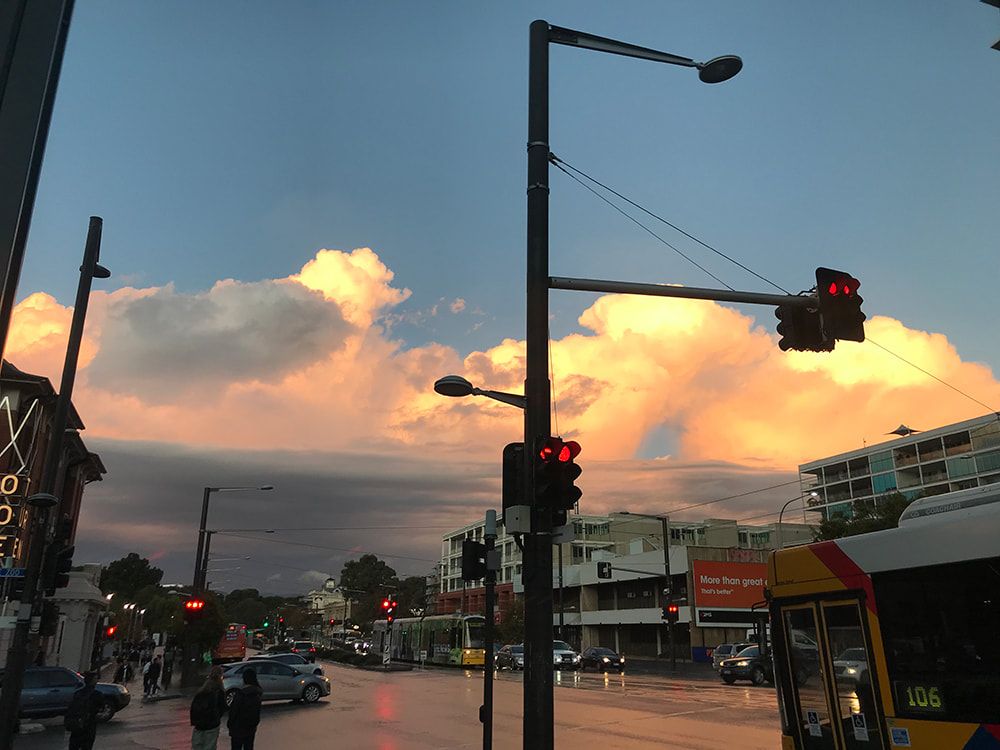
|
Adelaide
For the past 10 years most of my creative work was based where I was living, Bath (UK), the names of Bath-based enslavers became very familiar to me. When the University of Adelaide fellowship opportunity came up one street name in particular leaped out at me, Pulteney Street. William Pulteney was the enslaver and property speculator who funded Bath’s grand Georgian housing estate, with Sydney Gardens at its centre. It was the commissions in Sydney Gardens that opened up my current phase of work around botany and empire. Colonial occupation and place naming in Australia resonates in the gardens and in Bath Abbey with the memorialisation of Sydney's convict fleet commander and first Governor, Arthur Philip. Closer inspection of the Adelaide map and I saw a Bath Lane just running off Pulteney Street. I even found an Airbnb there! In the end the Airbnb was already booked and it turned out that the Pulteney I had first spotted had, like Governor Sir Henry Edward Fox Young, had been given someone else's name at birth. Our man in Bath had changed his surname as a condition of marriage, this man in Adelaide has Pulteney as a first name! He was Sir Pulteney Malcolm, the street supposedly named for him in recognition that he had recommended Sir John Hindmarsh for the South Australia project. Since moving down river from Bath I have been following exploring the stories and business empires of Bristol connected enslavers and their business associates, notably those on my doorstep, the interconnected dynasties of Gibbs, Brights and Miles. As ever, following Lindqvist's exhortation, to dig where you stand, starting where I live and walking from my front door. 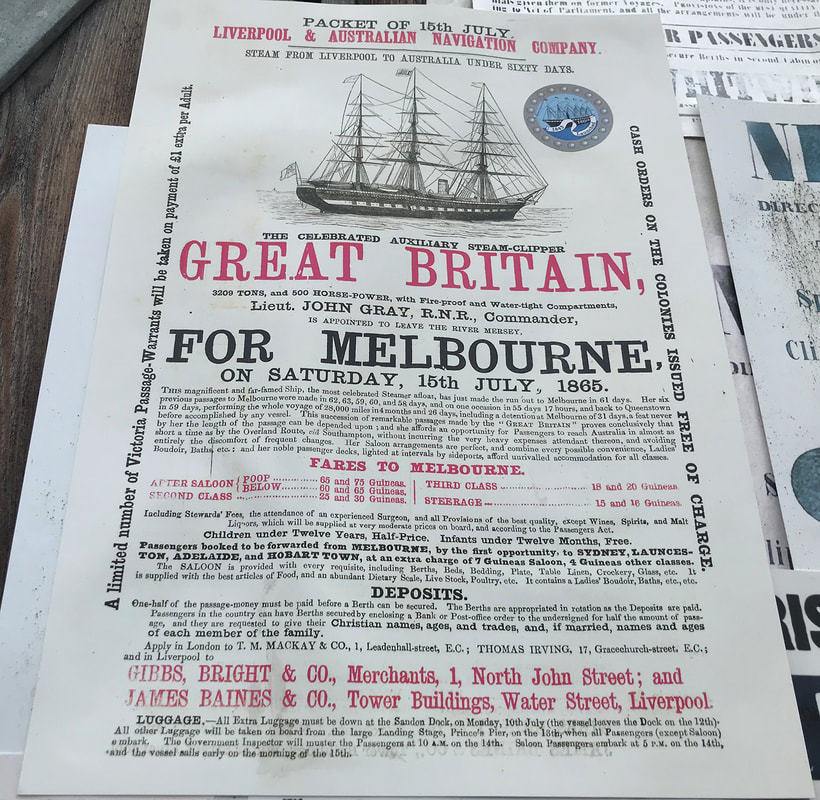
|
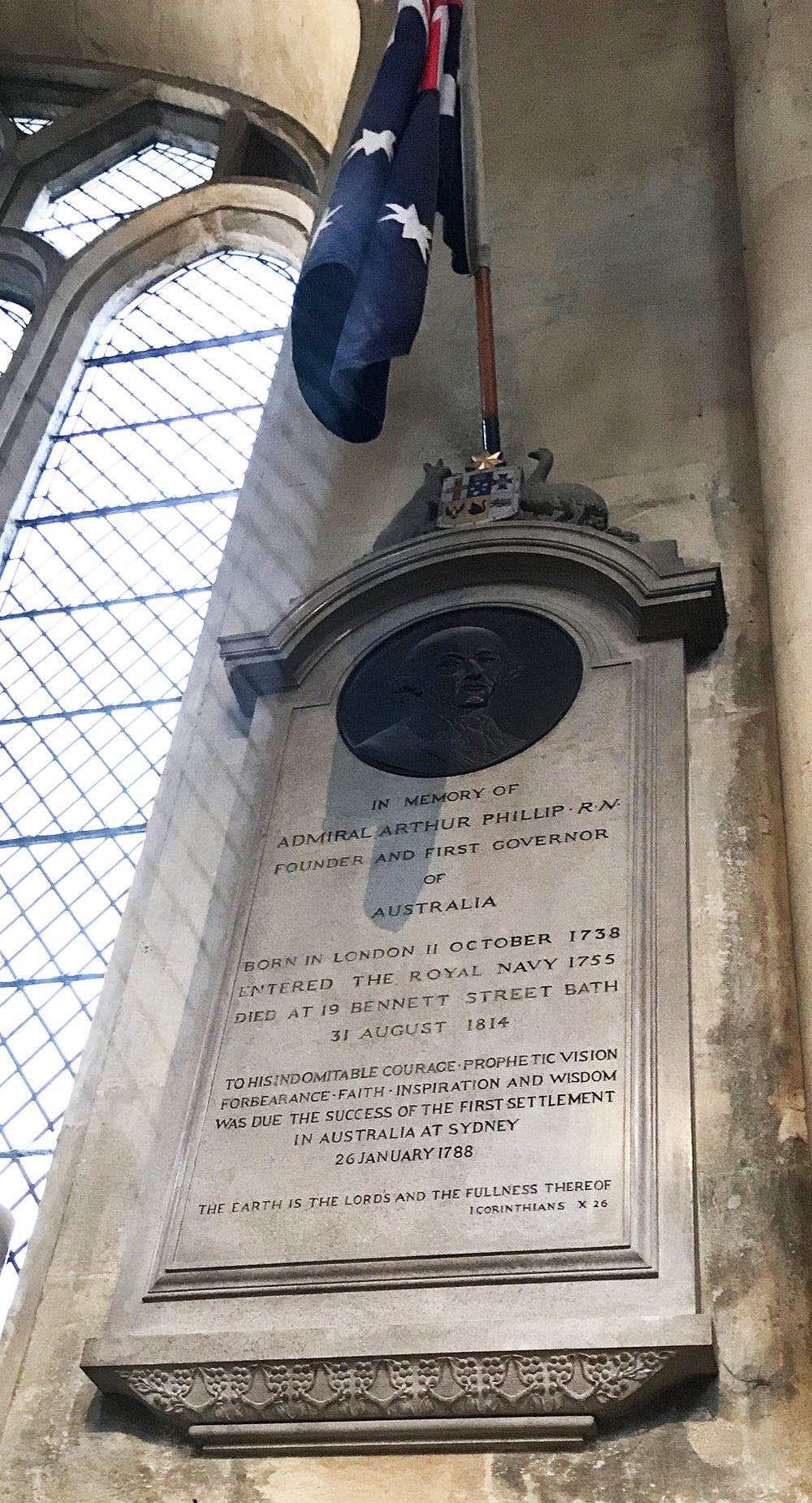
Admiral Phillip retired to Bath and died there. He is memorialised in Bath Abbey alongside the enslavers and colonialists
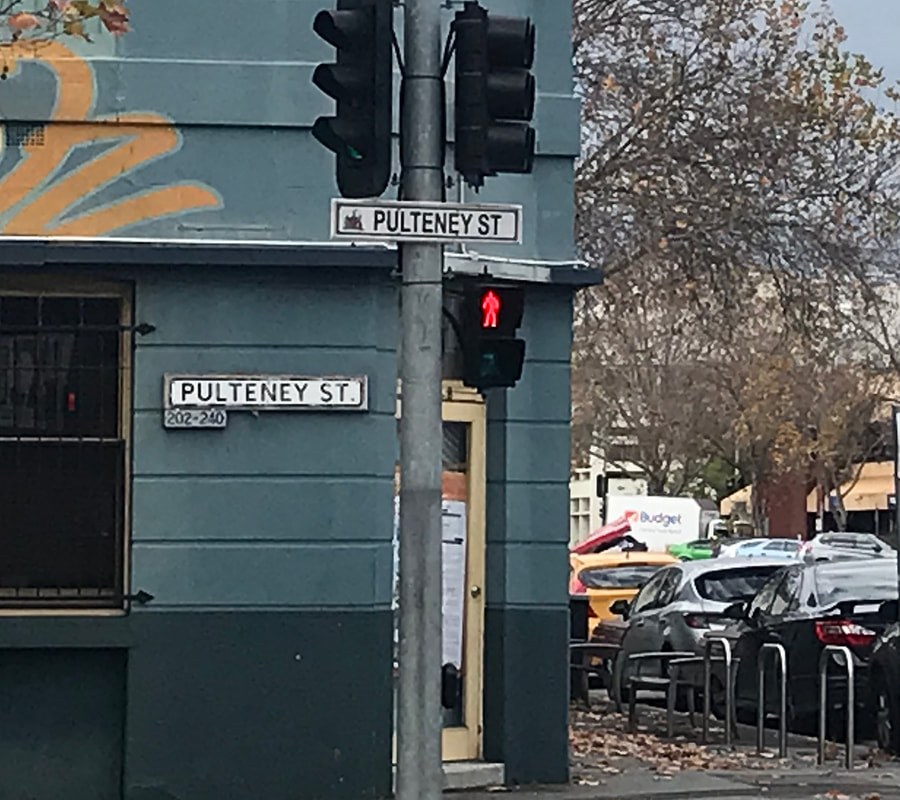
I walked those strange connections in Adelaide:
at the intersection of Angas Street and Pulteney Street where Bath Lane leads off there is now a hospital. The fine country house of the Brights at Ham Green near Bristol is now a place of sanctuary for people living with cancer.
Perhaps there's a metaphor there |
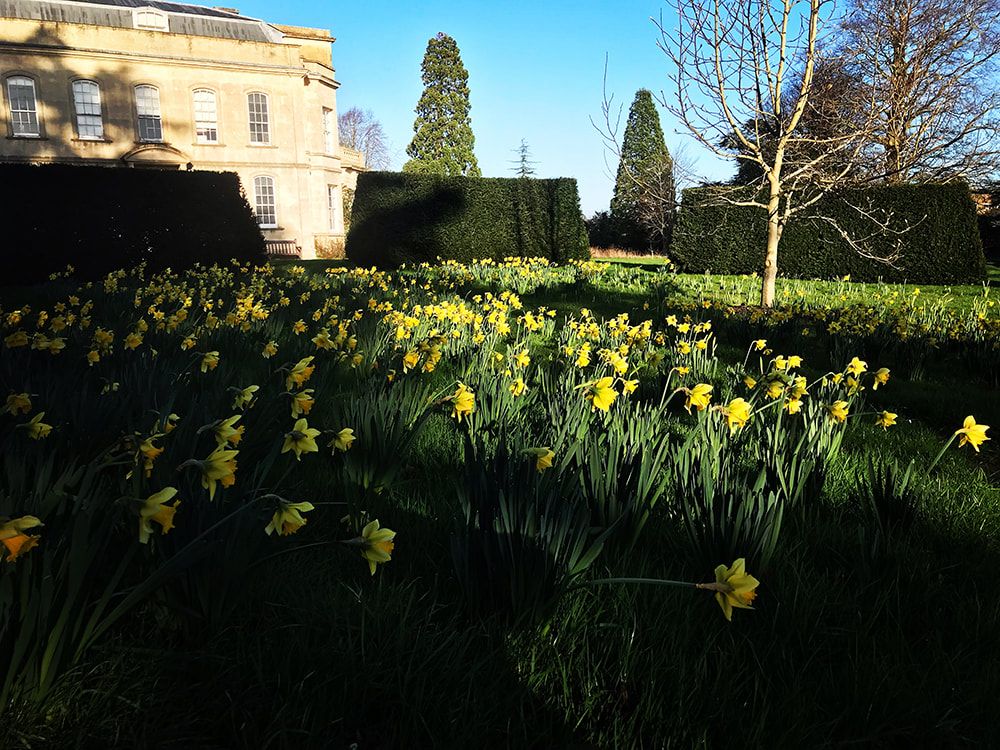
It seems appropriate, from manifestations or resonances of atrocity to practices of care....
Questions of acknowledgement, apology and reparation, however, remain. Questions of healing. Wounds.
So let this be a beginning, east of Eden.
Questions of acknowledgement, apology and reparation, however, remain. Questions of healing. Wounds.
So let this be a beginning, east of Eden.
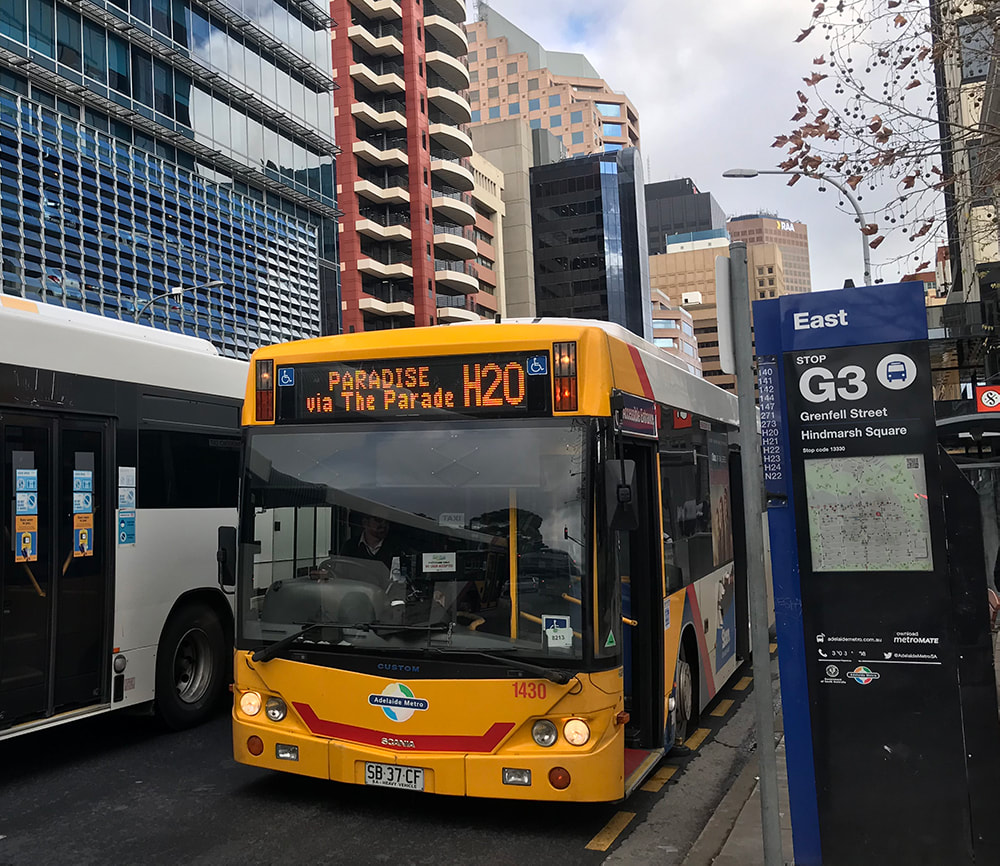
Walking with…
The process invites us to do some homework, to think about who we are and where we derive our sense of ourselves, how we are situated. Get ourselves situated. So I would like you to ask yourself the question, who am I walking as today? And perhaps refer to that as we walk.
I would like to invite you to change your perspective… reach up in the air and stretch up out to your tip toes and take a huge breath in and breath out.
And again
What are you senses giving you.…what does it make you think of….?
Now cutch down and notice the textures beneath your feet
Now very slowly lets get up and start to walk….tread lightly there may be bodies beneath our feet…
When the missionaries arrived, the Africans had the land and the missionaries had the Bible. They taught us to pray with our eyes closed. When we opened our eyes, they had the land and we had the Bible variously attributed Kenyatta, Achebe, Tutu
The process invites us to do some homework, to think about who we are and where we derive our sense of ourselves, how we are situated. Get ourselves situated. So I would like you to ask yourself the question, who am I walking as today? And perhaps refer to that as we walk.
I would like to invite you to change your perspective… reach up in the air and stretch up out to your tip toes and take a huge breath in and breath out.
And again
What are you senses giving you.…what does it make you think of….?
Now cutch down and notice the textures beneath your feet
Now very slowly lets get up and start to walk….tread lightly there may be bodies beneath our feet…
When the missionaries arrived, the Africans had the land and the missionaries had the Bible. They taught us to pray with our eyes closed. When we opened our eyes, they had the land and we had the Bible variously attributed Kenyatta, Achebe, Tutu
Finding Country: scoping a cycle of walks in North Somerset
|
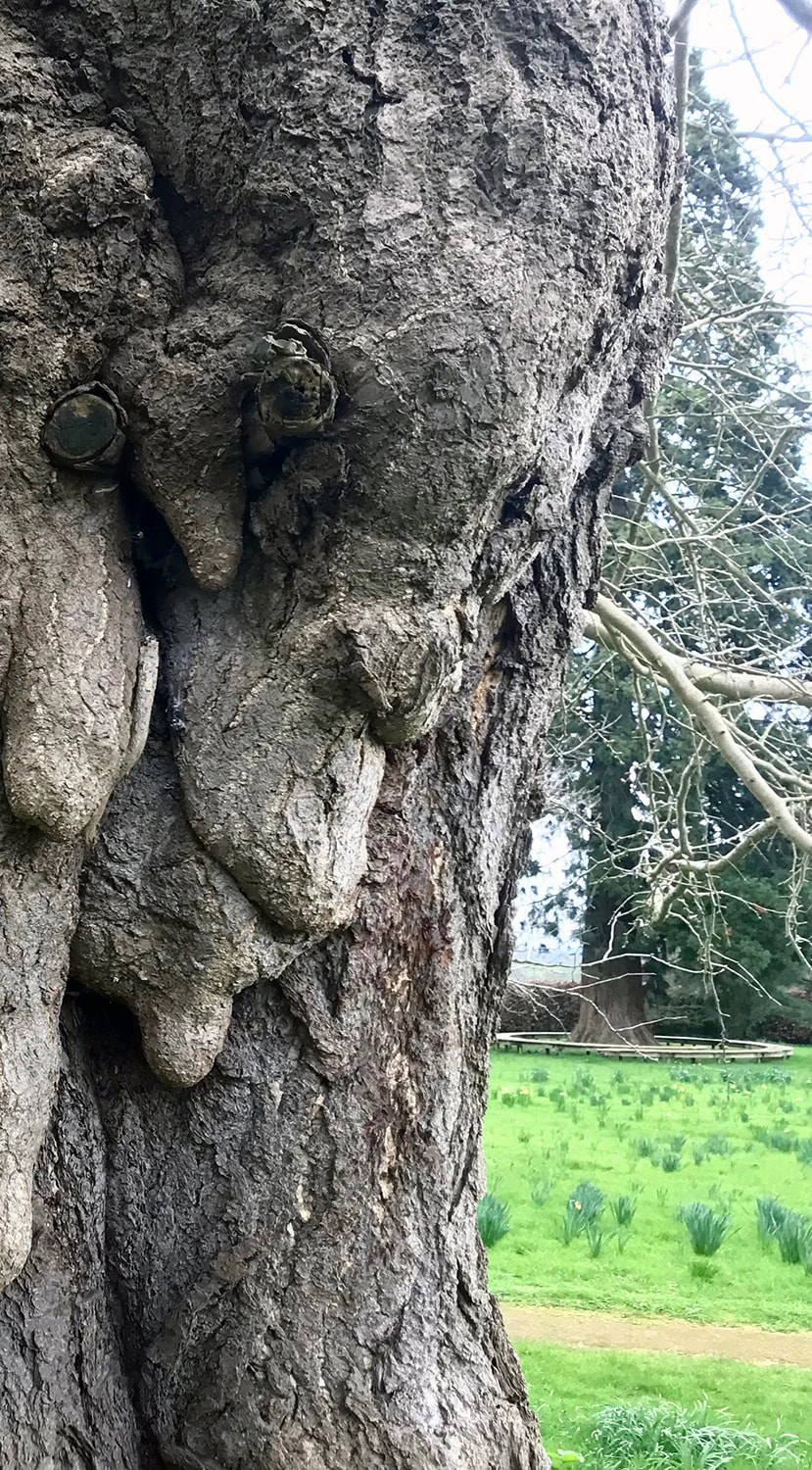
I am currently weaving the walks in Adelaide towards a cycle of walks in a triangle denoted by the country houses of 3 dynastic estates in North Somerset, the hinterland of Bristol (UK)
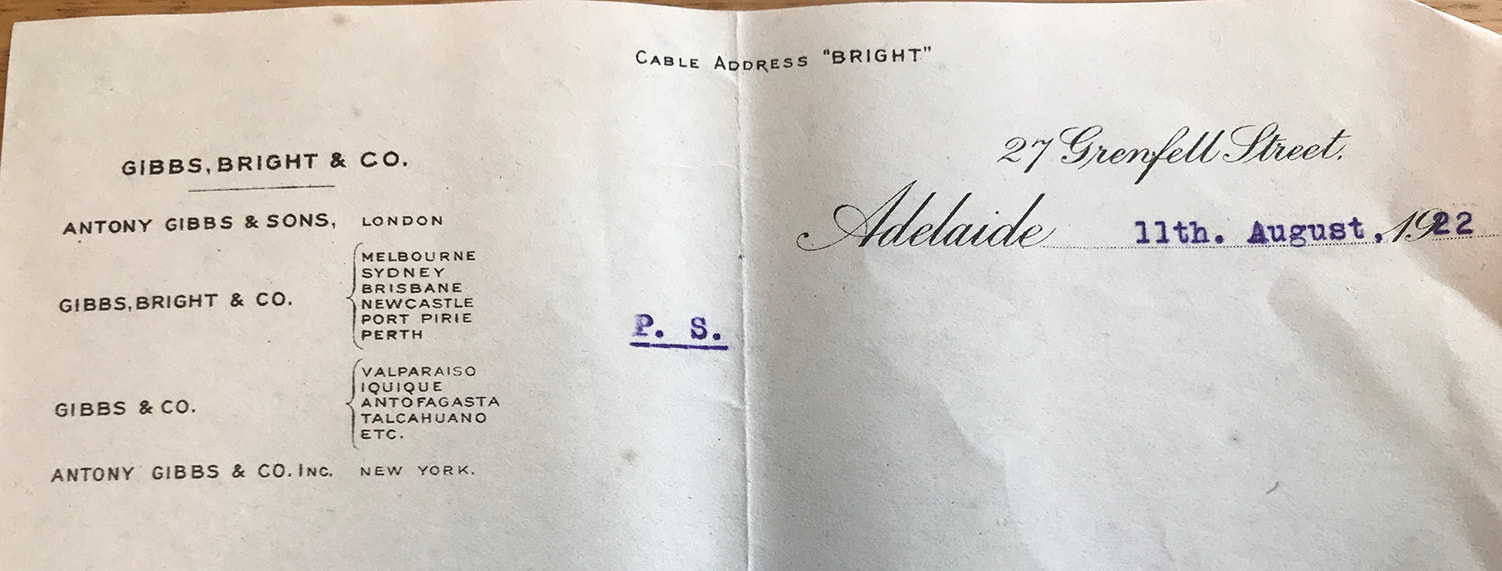
The Gibbs at Tyntesfield and Belmont, the Brights at Ham Green and the Miles at Leigh Court. They were enslavers and/or their wealth was derived from the labour of trafficked and enslaved Africans and other forms of colonial extraction. The Gibbs and the Brights used their wealth to fund the Great Western Cotton Company, the Great Western Railway and the Great Western Steamship Company. They bought the SS Great Britain as salvage and relaunched it in 1852 as a ship carrying economic migrants to Australia; the Bright Brothers, subsequently Gibbs, Bright & Co, were active in many forms of extraction and terraforming in Australia including wool and mining. I am interested in following the entangled business and social threads of these neighbouring and intermarried families and thereby grow my understanding of the impact and legacies. I am particularly interested in the land they transformed for pleasure and profit at home and abroad. Walking through these estates, sensing presences of enslavers and enslaved in the landscape, we acknowledge the buildings and land forms as sites of memory. . |
Walking and asking questions offers an opening up to the unheard voices of the colonised, enslaved and dispossessed. Reaching out to the spectres from the past we will reflect on contemporary resonances, acknowledgement, apology and reparation.